






Oil Freezing Point Tester
Looking for a reliable oil freezing point tester to evaluate insulating oil under extreme cold conditions? Weshine Electric is a professional manufacturer specializing in transformer oil testing instruments. Our automatic oil freezing point testers deliver fast, precise, and repeatable determination of low-temperature fluidity and solidification limits in transformer oils and dielectric fluids. Built in strict compliance with ASTM D97 and ISO 3016 standards. Explore our catalog or browse our full range of transformer oil testing equipment.
Need technical specifications or direct factory pricing?
-
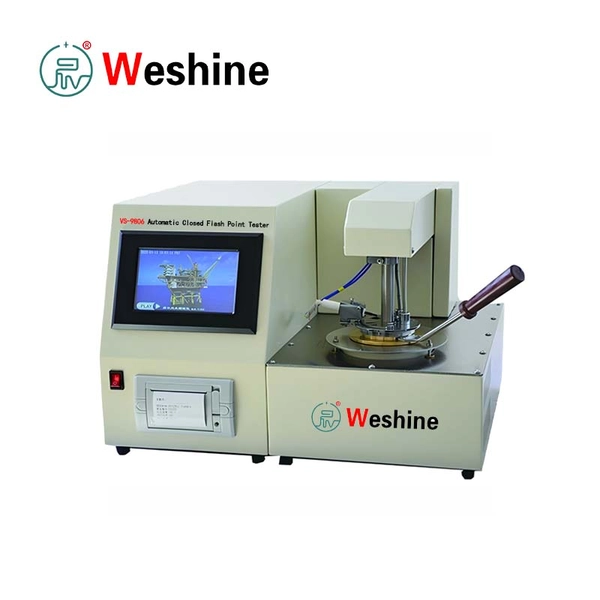
Automatic Closed Flash Point Tester | VS-9806
-
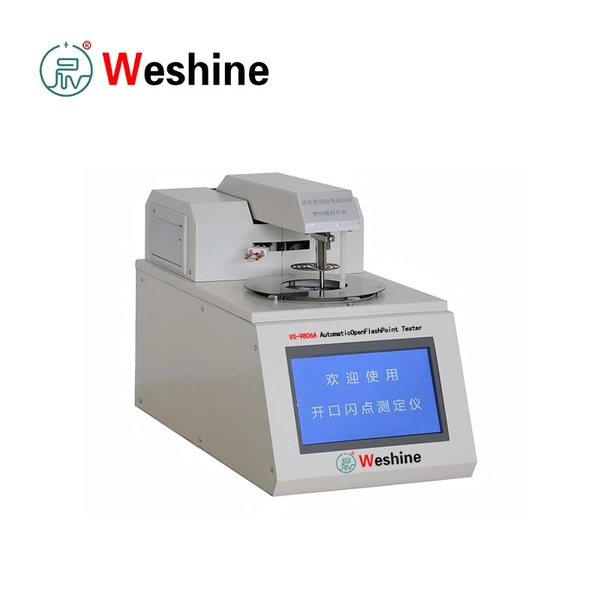
Automatic Open Flash Point Tester | VS-9806A
-
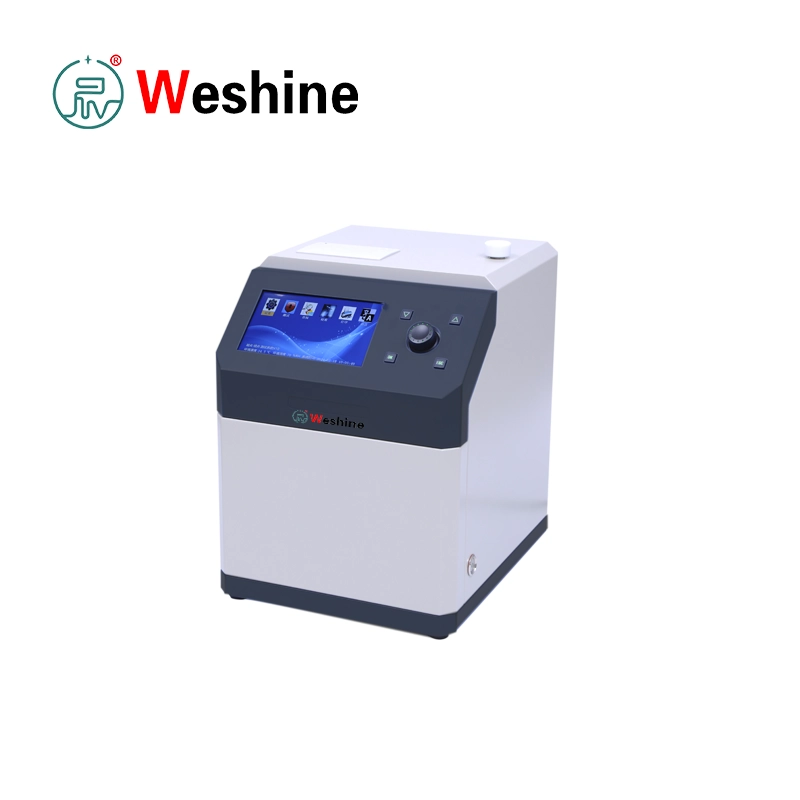
Automatic Oil Freezing Point Tester | VS-9810
Oil Freezing Point Tester & Insulating Oil Pour Point Analyzers
In cold regions and high-altitude power installations, insulating oil must maintain sufficient fluidity to ensure effective thermal circulation, heat dissipation, and arc quenching inside electrical apparatus. When ambient temperatures drop below the oil's threshold, wax crystallization occurs, leading to oil solidification, restricted cooling, and severe dielectric failure risks.
As a professional manufacturer of electrical diagnostic devices, Weshine Electric develops high-precision oil freezing point testers and oil pour point testers. Engineered with advanced cooling bath technology, automatic temperature control, and high-sensitivity optical detection, our instruments provide accurate, repeatable low-temperature evaluations for power utilities, manufacturing facilities, and oil analytical laboratories.
Applications of Oil Freezing Point Testers
Power Utilities & High-Voltage Substations
-
Cold-Weather Operational Safety: Verifying that transformer oil maintains required fluidity during extreme winter operations.
-
Environmental Adaptability Testing: Assessing low-temperature performance when commissioning electrical assets in arctic, sub-zero, or high-altitude environments.
-
Routine Preventive Maintenance: Screening aged or reconditioned oil batches using a precision oil pour point tester to prevent circulation blockages.
Transformer Manufacturing & Factory Quality Control
-
Raw Material Screening: Testing bulk insulating oil shipments from suppliers to confirm low-temperature compliance before transformer filling.
-
Factory Acceptance Testing (FAT): Ensuring specified dielectric fluid grades meet international low-temperature specifications prior to dispatch.
Testing Laboratories & Inspection Agencies
-
Standard-Compliant Analysis: Performing automated freezing point and pour point determination according to international standard protocols.
-
Fluid Qualification & R&D: Evaluating low-temperature behavior for alternative dielectric liquids, synthetic esters, and bio-based insulating fluids.
Featured Low-Temperature Oil Testing Products
Explore our flagship low-temperature diagnostic equipment designed for automated laboratory and field use:
Automatic Oil Freezing Point Tester
Engineered specifically for automated freezing point and pour point analysis of transformer mineral oils, switchgear fluids, and synthetic lubricants. Features advanced semiconductor/compressor refrigeration, digital temperature monitoring, and high-repeatability test routines.
-
Key Function: Automated cooling, tilt/flow detection, and digital result reporting for low-temperature fluidity analysis.
-
Explore Product: Automatic Oil Freezing Point Tester
Technical Significance of Freezing Point & Pour Point
Evaluating low-temperature parameters is critical for selecting the correct dielectric fluid for specific operating environments:
| Parameter | Definition & Engineering Importance |
| Freezing Point | The exact temperature at which insulating oil loses all fluidity and solidifies completely, halting thermal circulation. |
| Pour Point | The lowest temperature at which insulating oil continues to flow under standardized test conditions. |
| Cloud Point | The temperature at which micro-paraffin wax crystals begin to form, causing visual cloudiness in the fluid. |
Utilizing an automatic oil freezing point tester ensures accurate detection of these thermal limits, protecting transformers against localized overheating caused by oil circulation failure.
Advanced Features and Technology
High-Efficiency Cooling Bath Technology
Utilizes advanced refrigeration systems capable of rapid cooling ramps down to ultra-low temperatures (e.g., -50°C to -70°C), maintaining highly stable temperature control.
Automated Flow Detection & Digital Control
Features microprocessor control with automated optical detection mechanisms that identify fluid movement without manual operator intervention, eliminating subjective reading errors.
User-Friendly Interface & Intelligent Data Processing
Equipped with full-color digital display screens, onboard historical memory, built-in thermal printers, and USB export functions for effortless integration into modern laboratory management systems (LIMS).
Key Advantages of Weshine Oil Freezing Point Testers
-
High Precision & Repeatability: Delivers consistent, highly repeatable measurement data under standardized cooling gradients.
-
Fully Automated Testing: One-touch execution reduces operator labor and eliminates human bias during pour point determination.
-
Robust Construction: Built for stable, continuous operation in both analytical laboratories and industrial testing centers.
-
Global Standard Compliance: Engineered to perform testing strictly in line with international testing codes.
Low-Temperature Oil Testing Standards
| Standard | Application / Description |
| ASTM D97 | Standard Test Method for Pour Point of Petroleum Products |
| ISO 3016 | Petroleum and related products from natural or synthetic sources – Determination of pour point |
| ASTM D5950 | Standard Test Method for Pour Point of Petroleum Products (Automatic Tilt Method) |
| IEC 60296 | Fluids for electrotechnical applications – Unused mineral insulating oils for transformers and switchgear |
How to Choose the Right Oil Pour Point Tester
When selecting an oil freezing point tester for your facility, evaluate the following technical capabilities:
-
Refrigeration Limit: Ensure the cooling system can comfortably reach temperature thresholds well below your region's lowest recorded ambient temperature (e.g., -60°C).
-
Automation Level: Fully automatic tilt/detection systems save significant time compared to manual glass tube observation methods.
-
Comprehensive Diagnostics: Pair your low-temperature tester with other essential tools in our transformer oil testing equipment catalog, such as breakdown voltage and moisture analyzers.
Why Choose Weshine Electric
Technical Capabilities & Quality Manufacturing
Weshine Electric specializes in high-voltage testing and dielectric liquid evaluation. Our oil freezing point testers undergo multi-point thermal calibration to guarantee high accuracy across all temperature ranges.
Complete Transformer Oil Testing Portfolio
We offer complete end-to-end laboratory solutions including BDV breakdown testers, Karl Fischer moisture titrators, DGA gas chromatographs, and low-temperature analyzers.
Global B2B Support & Customization
We provide global power utilities, transformer factories, and commercial laboratories with tailored technical support, calibration services, and flexible OEM/ODM options.
Related Products & Category Links
Complete your low-temperature fluid testing setup with these related solutions:
-
Automatic Oil Freezing Point Tester — High-precision automatic freezing and pour point testing system.
-
Transformer Oil Testing Equipment Category Page — Explore our full catalog of insulating oil diagnostic instruments.
Frequently Asked Questions
Q1: What is the difference between oil freezing point and pour point?
The pour point is the lowest temperature at which the oil will still flow when poured, while the freezing point refers to the temperature at which the fluid completely solidifies into a solid state. Both parameters measure low-temperature fluid performance.
Q2: Why is pour point testing critical for transformer insulating oil?
In cold climates, if transformer oil drops below its pour point, natural convection stops. This prevents heat generated by the core and windings from dissipating, which can trigger severe internal overheating and dielectric breakdown.
Q3: What is a typical acceptable pour point for transformer oil?
According to standards like IEC 60296, severe cold-climate transformer oils typically require pour points of -40°C or lower (-50°C for arctic grade oils) to ensure safe operational margins.
Q4: How does an automatic oil freezing point tester improve test efficiency?
Manual pour point testing requires constant visual inspection at every 3°C temperature drop. An automatic tester handles cooling, interval tilting, optical flow detection, and data recording automatically, significantly improving accuracy and saving laboratory labor.