






Cable Fault Locating System
Looking for a high-precision cable fault locating system to pinpoint insulation breakdown and sheath damage? Weshine Electric is a leading Electrical Testing Equipment Supplier. Our comprehensive cable diagnosis systems combine Time-Domain Reflectometry (TDR), high-voltage surge generators, and acoustic-magnetic pinpointing to identify open circuits, short circuits, and high-resistance faults rapidly. Reduce trench excavation costs and restore power grid reliability. Explore our catalog or browse our specialized cable fault distance locator solutions.
Need technical specifications or competitive underground cable fault locator price quotes?
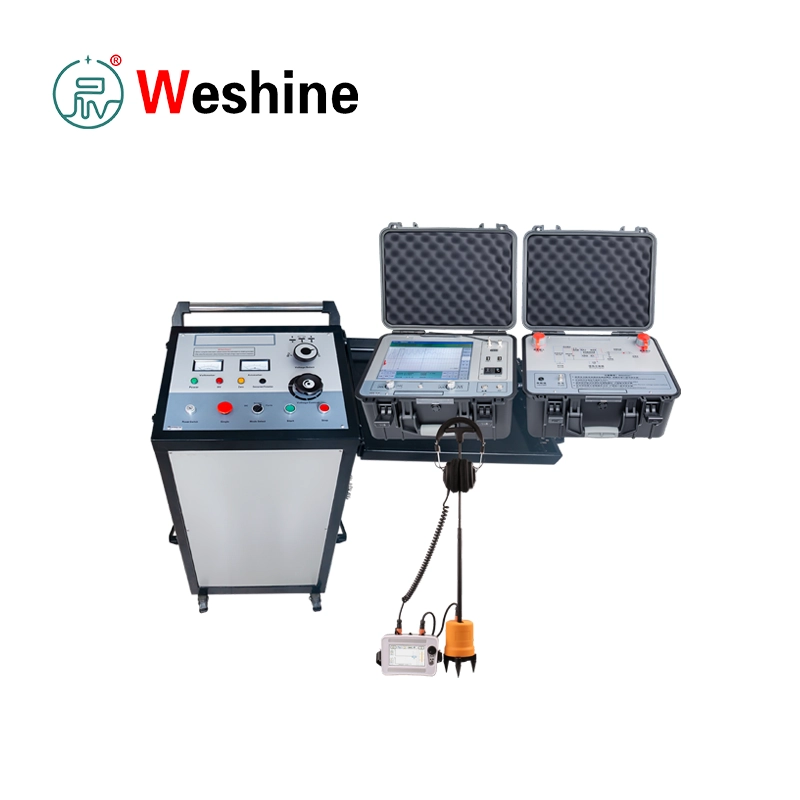
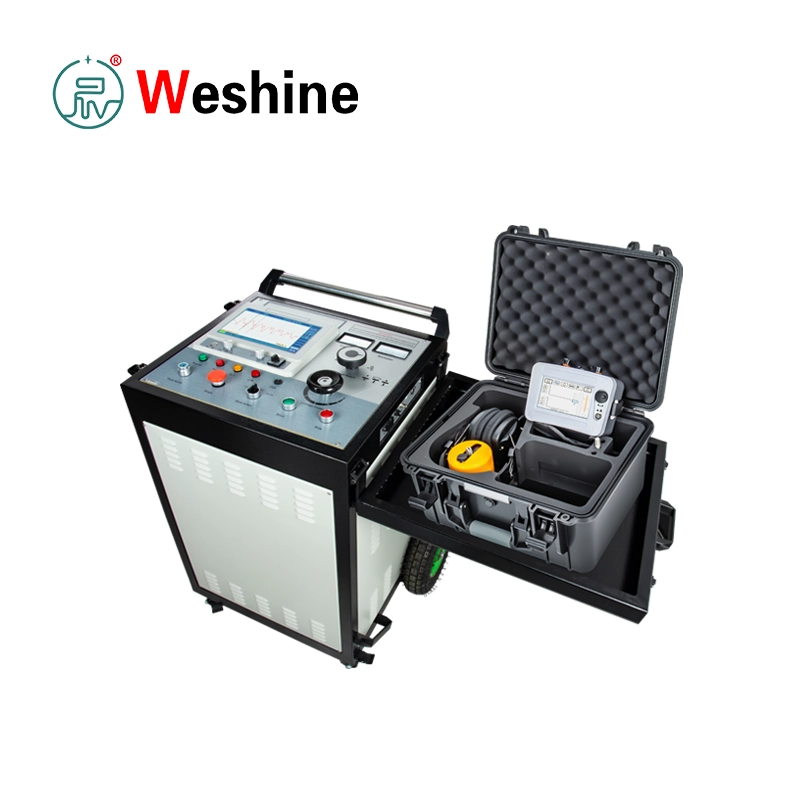
Cable Fault Locating System for Underground Cable Testing & Diagnosis
Unplanned power cable failures in underground and overhead transmission networks lead to costly outages, industrial production stoppages, and expensive emergency excavation. Quickly identifying and pinpointing fault locations is vital for utility engineers and industrial maintenance teams aiming to reduce downtime and minimize repair expenses.
As a trusted B2B manufacturer and Electrical Testing Equipment Supplier, Weshine Electric provides advanced cable fault locating systems designed for power utilities, grid operators, cable manufacturers, and electrical contractors. Our field-portable cable fault finder technology integrates pre-location and pinpointing workflows, ensuring fast, reliable, and high-precision fault location across complex urban and industrial cable routes.
Applications of Cable Fault Locating Systems
Underground Power Cable Networks
-
Distribution Network Repair: Locating underground insulation breakdown, water ingress, and mechanical damage in direct-buried cables.
-
Trenchless Repair Guidance: Delivering precise distance readings to minimize pavement destruction and reduce excavation area costs.
-
Routine Asset Inspections: Evaluating line conditions using an underground cable fault locator before energizing new or repaired lines.
Power Utilities, Substations & Transmission Grids
-
Emergency Outage Restoration: Rapidly locating breakdown points in high-voltage feeder cables during unexpected grid tripping.
-
Preventive Maintenance Programs: Identifying developing insulation degradation in aged cable runs before total electrical failure occurs.
-
HV Cable Diagnosis: Deploying specialized hv cable fault location equipment for long-distance, high-capacity utility circuits.
Cable Manufacturing & Quality Control
-
Factory Acceptance Testing (FAT): Identifying conductor disconnections, insulation voids, or sheath defects post-manufacturing.
-
Quality Assurance Audits: Conducting high-voltage pulse reflection testing on drum-wound raw cable inventories.
Industrial Facilities & Infrastructure Projects
-
Industrial Plant Power Maintenance: Pinpointing cable faults within complex manufacturing facilities, mines, and offshore plants.
-
Transportation & Railway Power Systems: Monitoring traction power lines and signaling cable networks.
Types of Cable Faults Detected
Power cables experience diverse mechanical, thermal, and electrical stresses. Our diagnostic systems effectively isolate and resolve all primary fault types:
| Cable Fault Type | Physical Description | Recommended Locating Method |
| Open Circuit Fault | Broken conductor or physical disconnection | Time-Domain Reflectometry (TDR) |
| Short Circuit Fault | Phase-to-phase or phase-to-ground direct contact | Low-Voltage Pulse Reflection (TDR) |
| Ground & Sheath Fault | Outer sheath damage or moisture ingress leakage | Step Voltage Method / Sheath Fault Tester |
| High-Resistance Fault | Flashover breakdown occurring only under high voltage | Impulse Current Method (ICM) / Surge Pulse |
| Insulation Aging Fault | Water treeing, partial discharge, or thermal degradation | High-Voltage Surge & Acoustic Pinpointing |
Advanced Cable Fault Locating Technologies
Modern power cable diagnosis requires a multi-stage approach combining distance pre-location with ground-level pinpointing:
Time Domain Reflectometry (TDR)
Sends low-voltage electrical pulses along the cable. By analyzing the reflected waveform characteristics, the system measures impedance changes and determines exact distances to open or short circuits.
High-Voltage Surge Wave & Impulse Method
Generates high-energy surge pulses to trigger controlled arc flashes at high-resistance fault sites, converting invisible insulation breakdowns into detectable acoustic and electromagnetic signals.
Acoustic-Magnetic Pinpointing
Combines synchronized acoustic signal pick-up with magnetic pulse detection at ground level, guiding field technicians directly over the underground breakdown point with sub-meter accuracy.
Cable Fault Locating System Categories
To meet diverse field requirements, Weshine provides customized equipment configurations:
1. Cable and Pipe Locator
Rugged, handheld electromagnetic locators engineered to trace underground metallic pipe and cable pathways, identify route depth, and map utility corridors prior to excavation.
2. Cable Fault Pre-Location System
High-precision TDR units and high-voltage surge generators designed to measure overall fault distance across long-distance MV/HV cable runs.
-
Explore Solutions: Cable Fault Distance Locator Category Page
3. Acoustic-Magnetic Pinpointing Systems
Ground-level field receivers featuring digital noise filtering and real-time audio/visual distance indications to pin-point exact breakdown sites.
Key Features of Weshine Cable Fault Locating Equipment
-
High Distance Measurement Accuracy: Advanced digital signal processing achieves sub-meter pre-location accuracy, drastically reducing excavation costs.
-
Multiple Integrated Testing Modes: Supports TDR pulse reflection, arc reflection (ARM), current impulse, and voltage decay methods in a single unified system.
-
Rugged Field Operation: Enclosed in shock-resistant, weather-sealed field cases with high-capacity rechargeable battery support for remote field operation.
-
Intelligent Waveform Analysis: Features high-resolution color screens with auto-waveform analysis, onboard data storage, and direct USB test report generation.
Cable Fault Location Workflow
Achieving fast and safe underground cable fault location relies on a standardized 5-step operational workflow:
-
Cable Condition Assessment: Verify cable insulation resistance using a megohmmeter and identify phase continuity.
-
Fault Characterization: Determine whether the fault is low-resistance, high-resistance, or open-circuit.
-
Distance Pre-location: Deploy TDR or surge reflection to calculate the approximate distance from the terminal unit.
-
Ground Pinpointing: Trace the cable route with an acoustic-magnetic receiver to pinpoint the exact underground sparkover point.
-
Cable Repair & Re-Commissioning: Trench, repair, and execute high-voltage dielectric acceptance tests before energization.
Cable Fault Locating Applications by Industry
-
Power Utilities: Distribution grid fault recovery, substation maintenance, and emergency service restoration.
-
Railway & Transportation: Traction power cable inspection, underground signaling line maintenance, and tunnel power diagnostics.
-
Industrial Manufacturing Plants: Chemical plants, steel mills, and refineries maintaining continuous heavy-duty power lines.
-
Engineering Contractors: Post-installation cable acceptance testing, commissioning, and utility mapping.
How to Choose the Right Cable Fault Locating System
When evaluating a cable fault locating system or reviewing underground cable fault locator price options, consider these primary operational factors:
-
Cable Voltage Rating: Select systems with surge generators matching your network voltage (e.g., 8 kV / 16 kV for LV/MV, 32 kV / 35 kV or higher for HV networks).
-
Surge Energy Output: Ensure impulse generators provide sufficient discharge energy (e.g., 500 J to 2048 J) to create clear acoustic signals through concrete or packed soil.
-
Portability vs. Vehicle Integration: Choose compact trolley/case-mounted units for field portability, or integrated van system packages for extensive utility networks.
International Standards and Equipment Safety
All Weshine cable testing instruments are designed and manufactured strictly in accordance with international electrical safety guidelines:
| Standard | Description / Focus |
| IEC 60840 | Power cables with extruded insulation and their accessories for rated voltages above 30 kV up to 150 kV |
| IEC 60502 | Power cables with extruded insulation for rated voltages from 1 kV up to 30 kV |
| IEEE 1234 | IEEE Guide for Fault-Locating Methods for Underground Transmission and Distribution Cable Systems |
Why Choose Weshine Cable Fault Locating Systems
Comprehensive Electrical Testing Portfolio
Weshine Electric integrates cable diagnosis tools into our broader Electrical Diagnostic Equipment lineup, providing complete high-voltage diagnostic coverage across power networks.
Integrated Cable Diagnosis Solutions
From low-voltage cable tracing to high-voltage surge generation and sheath testing, we offer complete end-to-end testing packages tailored to field requirements.
Field-Proven Reliability & Technical Support
Our equipment is built to withstand harsh field environments. Backed by expert engineering support, we provide system selection guidance, operational training, and comprehensive after-sales service.
Related Products & Category Links
Explore complementary diagnostic instruments from our catalog:
-
Cable Fault Distance Locator — High-precision TDR distance measurement and pre-location systems.
-
Industrial Electrical Testing Equipment — Explore our full homepage catalog for power grid testing solutions.
-
Electrical Diagnostic Equipment — Comprehensive parent catalog for high-voltage, transformer, and cable diagnostic tools.
-
Contact Sales Team — Request technical datasheets, system configurations, or direct factory pricing.
Frequently Asked Questions (FAQ)
Q1: What is a cable fault locating system?
A cable fault locating system is an integrated set of electrical diagnostic instruments used to identify, measure distance to, and pinpoint the exact physical location of electrical breakdown points, short circuits, or open circuits in underground or overhead power cables.
Q2: How does an underground cable fault locator pinpoint breakdown sites?
The system first uses Time-Domain Reflectometry (TDR) or surge wave pre-location to calculate the distance to the fault. Field operators then generate high-voltage surges to trigger acoustic sparks at the fault site, using an acoustic-magnetic receiver on the ground surface to pinpoint the exact location.
Q3: What factors influence underground cable fault locator prices?
Prices vary based on maximum voltage output (e.g., 16 kV vs. 35 kV), surge discharge energy rating (Joules), pre-location technology (basic TDR vs. multi-shot arc reflection systems), and overall system portability.
Q4: Can high-resistance faults be located using basic TDR pulse reflection?
No. High-resistance faults and transient flashover breakdowns typically show no impedance change under low-voltage TDR pulses. Locating high-resistance faults requires high-voltage surge generators (thumpers) combined with Arc Reflection Methods (ARM) or Impulse Current Methods (ICM).