






DC Hipot Test Set
Looking for industrial-grade DC high voltage generators tailored to your specific voltage, current capacity, or testing standards? Weshine delivers field-proven DC hipot testing equipment backed by expert technical support.
Why Partner with Weshine?
-
Custom Voltage & Capacity: Tailored voltage outputs (up to 500kV+) and custom current options to match your capacitive loads.
-
Factory-Direct Value: Direct manufacturer pricing with complete quality control and ISO/CE compliance.
-
Precision & Safety Built-In: ≤ 0.5% ultra-low ripple factor, automated discharge protection, and single-touch 75% V-Arrester mode.
-
Global Support & Delivery: Fast quotation, expert technical assistance, and reliable international shipping.
Contact Us to consult with our engineering team, request full technical data sheets, or get a competitive factory quote for your Electrical Testing Instruments.
-
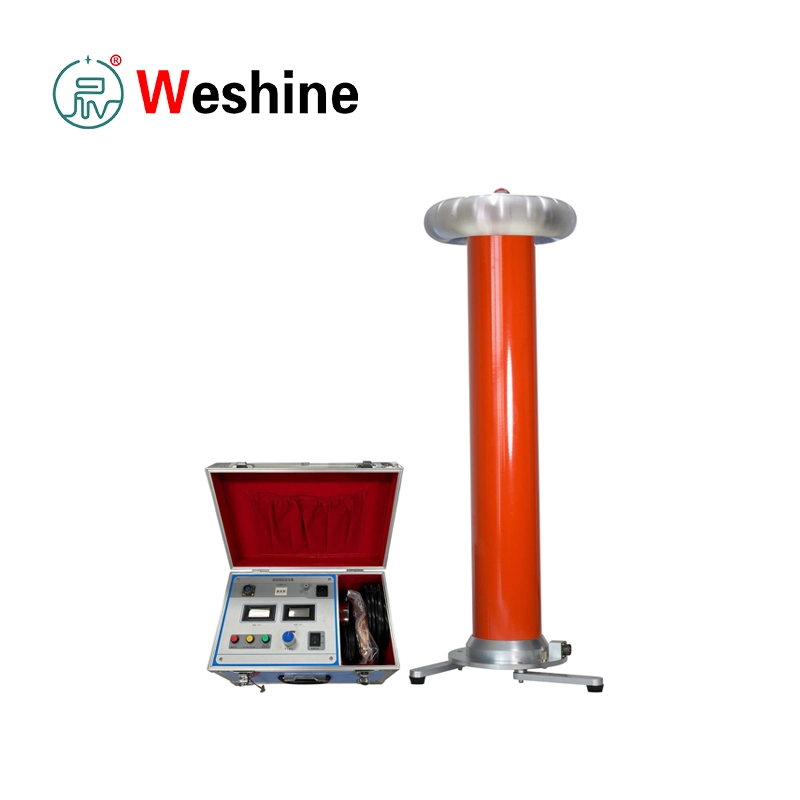
200kV DC High Voltage Generator | VS-ZGF200-5
-
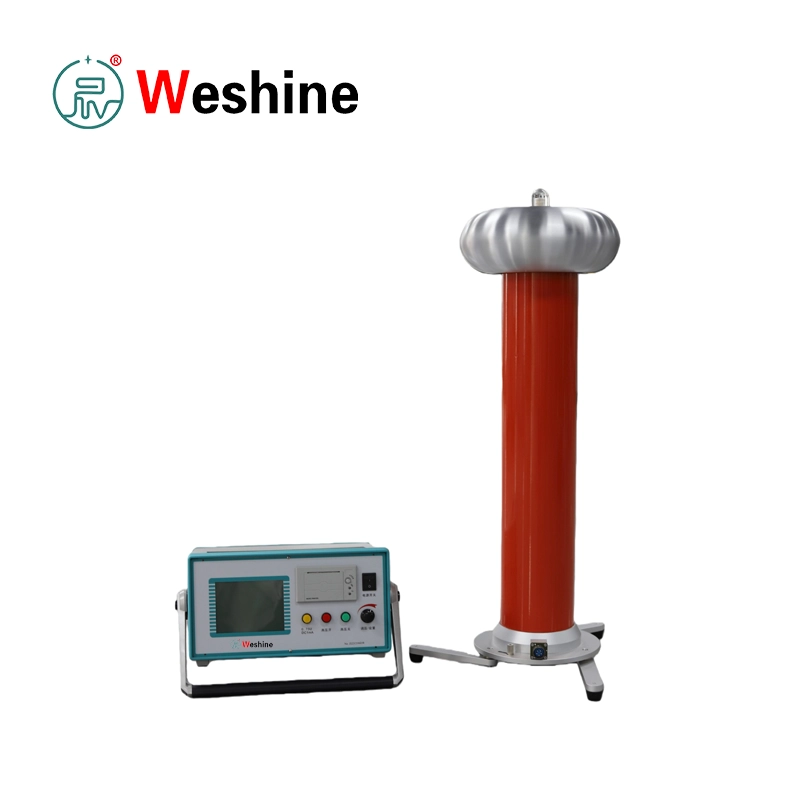
300kV DC High Voltage Generator | VS-ZGF300-5
-
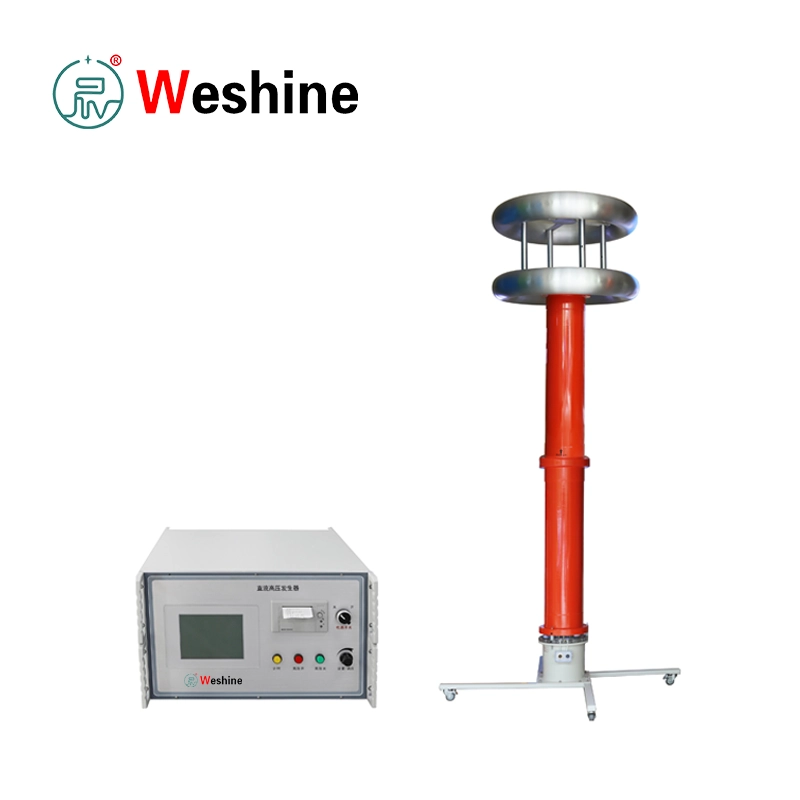
500kV DC High Voltage Generator | VS-ZGF500-30
DC Hipot Tester & DC High Voltage Generator Solutions
A DC Hipot Tester (DC Dielectric Withstand Voltage Tester), also widely known as a DC high voltage generator, is a specialized instrument designed for non-destructive insulation testing and leakage current measurement. Unlike AC withstand testing, DC testing applies a continuous unidirectional voltage to the insulation system. This suppresses the large capacitive charging current inherent in AC testing, making DC hipot test sets the ideal choice for evaluating high-capacitance electrical apparatus such as power cables, generators, surge arresters, and DC power systems.
As an established Electrical Test Equipment Manufacturer, Weshine provides advanced DC high voltage generators engineered with high-frequency pulse-width modulation (PWM) technology and high-precision voltage multiplier circuits. Our portable and heavy-duty DC hipot testers deliver high voltage output stability, ultra-low ripple voltage factor, and reliable protection functions, making them trusted across the global power maintenance and industrial sectors.
Whether you need field-portable DC high-voltage generators for cable fault diagnostic testing or high-voltage test units for factory acceptance inspection, explore Weshine's full range of industrial Electrical Testing Instruments.
Featured DC High Voltage Generators
Discover our core line of high-precision DC hipot test systems engineered for various voltage ratings and demanding field applications:
-
200kV DC High Voltage Generator
Ideal for medium to high voltage power grid testing. Designed for DC withstand voltage testing and leakage current measurement on MV/HV power cables, zinc oxide surge arresters, circuit breakers, and power transformers. Features a compact dual-body design for high field portability.
-
300kV DC High Voltage Generator
Versatile solution for substations and industrial facilities. Built for high-voltage power system maintenance, generator winding insulation testing, and high-voltage electrical equipment acceptance tests. Offers high output voltage accuracy combined with robust over-voltage protection.
-
500kV DC High Voltage Generator
Ultra-high voltage (UHV) diagnostic system. Engineered for heavy-duty extra-high-voltage grid testing, research laboratories, and HV equipment manufacturing facilities. Provides continuous, low-ripple high voltage output capable of driving demanding capacitive test loads.
Key Technical Advantages of Weshine DC Hipot Testers
Weshine DC withstand test sets combine advanced solid-state electronics with ergonomic control interfaces to ensure accurate dielectric measurement and complete operational safety.
-
High Frequency PWM Technology: Utilizes high-frequency switching technology to achieve fast voltage stabilization, exceptional output accuracy, and an ultra-low voltage ripple factor (≤ 0.5%).
-
Integrated 75% Voltage Function Button: Specifically engineered for Zinc Oxide (ZnO) surge arrester testing. With a single button press, the unit automatically switches to 75% of the breakdown voltage point to quickly measure 75% U-1mA leakage current according to IEC standards.
-
Precise Leakage Current Measurement: Equipped with micro-ampere meters featuring digital anti-interference shielding, allowing real-time monitoring of micro-ampere (µA) leakage current variations under high-stress fields.
-
Robust Multi-Layer Safety Protection: Features zero-voltage start interlocks, over-voltage setting, over-current trip protection, disconnect protection, and automated discharge interlocks to safeguard field technicians.
-
Lightweight & Portable Modular Architecture: Separates the control unit from the high-voltage multiplier cylinder, providing a rugged, water-resistant, and easily transportable solution for remote field testing.
DC Hipot Testing Equipment Selection Matrix
Compare our DC high voltage testing configurations to find the suitable match for your operational needs:
| Voltage Grade | Core Characteristics | Recommended Applications |
| 60kV – 120kV DC Testers | Ultra-lightweight, battery/mains powered options, compact. | Lower voltage cables, distribution surge arresters, electrical motors. |
| 200kV – 300kV DC Testers | High output power, high precision µA metering, 75% V-Arrester mode. | MV/HV underground cables, substation transformers, circuit breakers. |
| 400kV – 500kV+ DC Testers | Heavy-duty high voltage cylinder, ultra-low ripple, continuous duty cycle. | UHV power lines, high-capacitance power station generators, research labs. |
Primary Applications of DC High Voltage Testers
DC withstand voltage testing is crucial for evaluating insulation resistance, detecting localized voids, and preventing catastrophic electrical failures in high-voltage assets:
1. Power Cable Withstand & Leakage Testing
Used to measure insulation resistance and leakage current in paper-insulated lead-covered (PILC) cables and high-voltage DC distribution systems to detect moisture absorption or physical damage.
2. Zinc Oxide (ZnO) Surge Arrester Diagnostics
Widely used by power utilities to test the reference voltage (U-1mA) and 75% reference voltage leakage current of MOV surge arresters to determine aging and degradation.
3. Electric Motors & Stator Windings
Performs DC step-voltage tests on hydro-generators, thermal power station generators, and high-voltage industrial motors to diagnose insulation aging without risking AC thermal overload.
4. High-Voltage Components & Materials
Utilized by manufacturers for quality control, verifying dielectric breakdown strength in insulators, bushings, high-voltage capacitors, and insulating oil/gas barriers.
DC Hipot Tester vs. AC Hipot Tester: Comparison Guide
Understanding the distinct mechanical and electrical differences helps select the correct testing method:
| Feature | DC Hipot Tester | AC Hipot Tester |
| Test Current Type | Direct Current (Unidirectional) | Alternating Current (Reversing polarity) |
| Capacitive Current Demand | Minimal (Only brief initial charging current) | High (Requires continuous AC charging power) |
| Equipment Portability | Highly portable (Smaller power supply needed) | Heavier (Requires large testing transformers) |
| Main Diagnostic Output | Leakage current (µA) vs. Applied voltage curve | Pass/Fail dielectric breakdown threshold |
| Primary Test Specimens | Power cables, surge arresters, DC systems, generators | Transformers, switchgear, bushings, insulators |
How to Select the Right DC Hipot Tester
To choose the optimal DC high voltage test set from an established Electrical Test Equipment Manufacturer, evaluate these key parameters:
-
Maximum Test Voltage Requirement: Select a model where the maximum output voltage exceeds the test standard requirements (e.g., test voltage = 2.0 to 3.0 × nominal voltage).
-
Current Capacity (mA): Ensure the rated output current (e.g., 2mA, 3mA, 5mA) can supply both the leakage current and the initial capacitive charging current of your test object.
-
Ripple Voltage Factor: For high-precision laboratory testing or MOV arrester testing, choose units with a ripple factor of less than 0.5% to avoid measurement errors.
-
Portability vs. Laboratory Use: Choose lightweight split-body designs for field commissioning, or integrated console systems for factory production line FAT testing.
Frequently Asked Questions About DC Hipot Testers
Q1: What is a DC hipot test used for?
A DC hipot test applies high direct-current voltage to electrical equipment to evaluate its insulation performance. By measuring the minute leakage current flowing through the insulation under high voltage, technicians can detect insulation moisture, cracks, or aging before failure occurs.
Q2: Why is a DC hipot tester preferred over an AC tester for high-capacitance test objects?
High-capacitance objects (like long cables or large generators) require massive AC charging current (I = 2π × f × C × U), which would demand an impractically large and heavy AC test transformer. A DC tester charges the capacitance once at the start of the test, requiring much less input power and making the test equipment significantly lighter and more portable.
Q3: What is the purpose of the 75% voltage function on a DC high voltage generator?
The 75% voltage function is designed specifically for testing zinc oxide (ZnO) surge arresters. When the tester determines the voltage at 1mA current (U-1mA), pressing this button automatically drops the output to 75% × U-1mA, allowing instant reading of the arrester's leakage current under normal operating voltage limits.
Q4: How should a test object be safely discharged after a DC hipot test?
Because DC testing leaves residual capacitive charge on the test specimen, a grounding rod with a damping resistor must be applied gradually to discharge the voltage slowly, followed by direct solid grounding before touching any conductors.