






How Long Does It Take to Measure Interfacial Tension with an Interfacial Tensiometer?
September 4, 2026
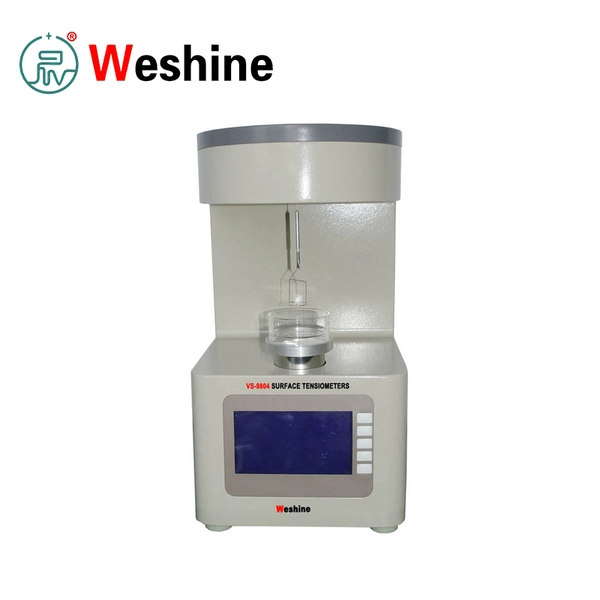
Lab technicians and quality control personnel frequently ask about the actual cycle time of interfacial tension testing. Total testing duration using an interfacial tensiometer is not a fixed value. It varies greatly according to test methodology, sample composition, calibration steps and target precision. This article breaks down real-world test timelines and major variables that define overall measurement speed.
Understanding Interfacial Tension and Tensiometers
Interfacial tension describes the molecular interaction force existing at the contact boundary between two immiscible phases, most commonly liquid-liquid or liquid-gas interfaces. This parameter is a vital quality metric widely monitored for insulating oil, petrochemical fluids, industrial surfactants and chemical raw materials. Interfacial tensiometers are dedicated analytical instruments built to quantify this interfacial force value in laboratory environments.
Definition of Interfacial Tension
Different from surface tension that refers to liquid-air boundary properties, interfacial tension specifically characterizes the tension formed between two distinct liquid phases. For power industry applications, it is a critical indicator to judge the aging degree of transformer insulating oil. Degraded oil will show obvious decline in interfacial tension readings, which serves as early warning evidence of insulation deterioration.
Common Measurement Principles of Interfacial Tensiometers
Du-Noüy ring method and Wilhelmy plate method remain the two most mainstream measuring principles for commercial interfacial tensiometers. The Du-Noüy ring method measures force required to pull a platinum ring out of the liquid-liquid interface. Wilhelmy plate records the wetting force acting on a vertical platinum plate immersed across phase boundaries. Both approaches calculate interfacial tension values based on force sensor feedback, yet they differ in sample preparation, equilibrium waiting time and overall test cycle.
Factors Affecting Interfacial Tension Measurement Time
Multiple variables jointly determine how long one complete interfacial tension test will take. Operators cannot only refer to pure instrument reading time; pre-test preparation and phase equilibrium waiting occupy a large share of total working hours.
Measurement Method
Du-Noüy ring tests generally complete faster for stable liquid-liquid systems. Wilhelmy plate mode demands longer waiting periods to achieve full interface equilibrium, especially for samples containing slow-diffusion surfactant components. Method selection must comply with corresponding industry standards, which directly sets minimum equilibrium hold-up time.
Sample Properties
Sample characteristics create the most obvious time differences. Low-viscosity, clean two-phase liquids separate rapidly and reach phase balance within minutes. Samples with high viscosity, trace impurities or surfactant additives need extended standing time to form a stable and clear interface. Emulsified samples will consume far more time, and in some cases pre-treatment is necessary before formal measurement.
Instrument Setup and Calibration
Pre-test work includes platinum ring or platinum plate cleaning, flame treatment, instrument zero adjustment and calibration. Thorough cleaning of probes is mandatory; residual contaminants will distort final data. Calibration and probe preparation may take several minutes, and this segment should be counted as part of the full test workflow. Skipping calibration steps may shorten time but sacrifices data repeatability.
Measurement Frequency and Precision Requirements
Single-spot quick measurement takes less time. If users need repeated parallel tests to improve data reliability, or set multi-point continuous monitoring, total time increases accordingly. Higher precision requirements mean more stabilization waiting time and repeated replicate runs.
Typical Measurement Time Range for Interfacial Tension Tests
Actual on-site lab test time is split into pre-processing, interface equilibrium and data acquisition phases. Below are practical time ranges observed under regular laboratory conditions.
Measurement Duration for Conventional Simple-Matrix Samples
For clean, low-viscosity standard samples such as fresh insulating oil paired with distilled water: After finishing probe cleaning and instrument calibration, phase equilibrium normally takes 3-8 minutes. Single formal measurement finishes within 1-3 minutes. Including sample loading and parallel duplicate tests, the whole complete test workflow generally falls between 10-20 minutes. This is the typical time frame for routine incoming-inspection tasks.
Measurement Duration for Complex Samples and Special-Scenario Tests
When dealing with aged oil, partially emulsified fluids, high-viscosity chemical solutions or samples with surface-active substances: Phase separation and equilibrium may require 15-40 minutes. Additional pre-treatment like centrifugation could be required. Combined with multiple parallel measurements, one full test procedure can extend to 45-70 minutes or even longer. Operators must not shorten equilibrium time arbitrarily for complex samples, otherwise inconsistent and drifting test results will occur.
Interfacial Tensiometers and Measurement-Efficiency Optimization
Reasonable instrument selection and standardized operating routines can effectively cut down unnecessary waiting time without sacrificing test accuracy.
Core Advantages of Our Interfacial Tensiometer Series
Our interfacial tensiometer is engineered for industrial lab routine testing, especially for petroleum and power-sector insulating oil analysis. High-precision force sensors deliver stable signal output and shorten data acquisition cycle. Built-in standard test templates for insulating oil avoid repeated parameter setup. Anti-drift design reduces frequent recalibration frequency. Quick-release platinum probe structure simplifies cleaning and replacement, effectively lowering auxiliary operation time for batches of samples.
Technical Support for Optimizing Test Efficiency
Simply speeding up instrument reading cannot boost overall efficiency. Our technical team provides practical guidance: proper sample storage methods to avoid pre-emulsification, standardized probe cleaning workflows, reasonable equilibrium time configuration for different sample types, and parallel testing suggestions for high-volume sample batches. These practical tips help laboratories balance test speed and credible measurement outputs.
Other Related Testing Equipment
For insulating oil complete quality assessment, interfacial tension testing is often used together with other oil analysis instruments. Related test devices include dielectric loss testers, oil breakdown voltage testers, Karl Fischer moisture analyzers and acid value testers. Combined test setups allow labs to complete full-item quality evaluation for transformer oil and other industrial liquid media.
Contact Us for Purchasing and Consultation
If you are looking for reliable interfacial tensiometers for your laboratory, or need technical consultation regarding sample test schemes, instrument parameter selection and standard-compliant operating procedures, please feel free to reach out to our team. Our engineering specialists can offer tailored solutions matching your sample types and daily testing throughput.

