






Can a Karl Fischer Moisture Analyzer Measure Moisture in Liquids?
September 5, 2026
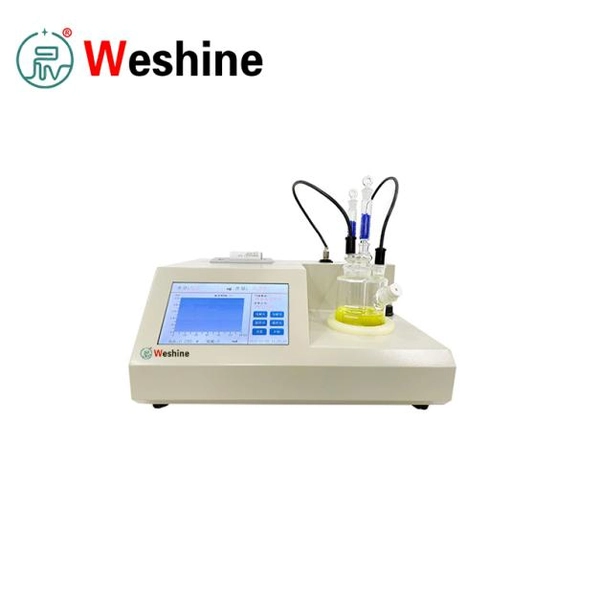

Moisture content represents one of the most critical quality indicators for numerous liquid raw materials, finished fluids and process intermediates across industrial workflows. Many field lab technicians and quality control engineers frequently raise a practical question: can a Karl Fischer moisture analyzer deliver accurate, repeatable moisture measurement for liquid-state samples. In short, yes. Properly configured Karl Fischer titration systems are widely accepted as the reference testing method for moisture quantification in liquid matrices.
Understanding Karl Fischer Titration
Karl Fischer titration stands as a well-established analytical technique dedicated exclusively to water content determination. Unlike general gravimetric drying methods, this chemistry-based test targets water molecules specifically, rather than measuring total volatile substances within test specimens. It has gained formal recognition in multiple international industrial standards for trace and routine moisture detection.
Reaction Principle of Karl Fischer Titration
The core Karl Fischer chemical reaction relies on the quantitative reaction between water, iodine, sulfur dioxide, alcohol and a base buffer. During testing, iodine reacts stoichiometrically with only water present inside the reaction cell. Operators obtain exact water mass by calculating the reagent consumption once the titration endpoint is reached. Both volumetric and coulometric instrument variants follow this fundamental reaction mechanism, differing mainly in how iodine is generated during analysis.
Measuring Moisture in Liquids
Liquid samples constitute the most common test matrix for routine Karl Fischer operations. Homogeneous liquid specimens can be directly injected into the titration cell under most circumstances, avoiding the thermal degradation risks often encountered when analyzing solid materials. Even viscous liquids can be processed with adapted sampling workflows.
Core Advantages for Liquid-Sample Moisture Testing
Practitioners prefer Karl Fischer systems for liquid moisture analysis for several practical performance merits that fit real-world lab conditions.
High Sensitivity
Coulometric Karl Fischer analyzers are capable of detecting trace-level water down to microgram ranges. This makes the method suitable for dry organic solvents and low-moisture insulating oils, where water concentrations sit at very low ppm levels. Volumetric models handle higher moisture liquid samples effectively.
Selectivity
The chemical reaction only responds to water molecules. Other non-aqueous volatile components dissolved inside the liquid sample will not interfere with final moisture readings, as long as samples do not contain side-reaction active substances. This feature separates it from loss-on-drying techniques that count all evaporable fractions.
Wide Range of Applicability
This method works for thin solvents, viscous oils, mixed organic fluids and many liquid chemical intermediates. With correct reagent selection, technicians can test polar and non-polar liquid samples across high-trace to percentage-level moisture concentrations.
Types of Karl Fischer Moisture Analyzers for Liquid Samples
Two mainstream instrument configurations cover liquid moisture testing scenarios: volumetric Karl Fischer titrators and coulometric Karl Fischer moisture analyzers.
Main Product Models for Liquid Moisture Determination
Coulometric units are the primary choice for liquid samples with trace moisture, such as transformer insulating oil and high-purity chemical solvents. Volumetric titration devices fit liquid samples with relatively higher water content, including certain raw chemical liquids and liquid pharmaceutical excipients. Some integrated combined models support switching between two modes to accommodate variable liquid sample batches. Instrument selection should always reference expected moisture range and relevant industry test standards.
Sample Preparation and Analysis for Liquid Samples
Even high-performance analyzers produce unreliable output without standardized sample handling. Liquid specimens are prone to absorbing ambient atmospheric moisture during transfer, which introduces obvious testing deviation.
Key Guidelines for Sample Handling and Testing
Seal liquid sample containers tightly before testing to prevent moisture ingress from surrounding air. For low-viscosity liquids, use syringes to inject defined sample volumes directly into the reaction cell. Highly viscous liquids may require pre-heating or compatible solubilizing reagents to achieve full sample dispersion. Operators must avoid sample cross-contamination between different batches. Blank tests are recommended to eliminate background moisture influence from solvents and glassware. Operators should record ambient humidity conditions for reference when documenting test reports.
Industrial Applications of Liquid-Phase Moisture Measurement via Karl Fischer Method
Liquid moisture measurement underpins quality control, incoming material inspection and failure diagnosis across multiple heavy-weight industrial sectors.
Petroleum and Chemical Industries
Within the petroleum sector, technicians test insulating oil, transformer fluids and various petrochemical liquid products. Dissolved moisture inside insulating oil directly impacts high-voltage equipment insulation performance. Chemical plants apply this method for moisture verification of organic solvents and liquid reaction feedstock.
Food and Beverage Industry
Selected liquid food raw materials, liquid additives and flavoring agents undergo Karl Fischer moisture testing to stabilize product shelf-life and production consistency.
Pharmaceutical Industry
Pharmaceutical liquid excipients, liquid drug formulations and reagent solvents require precise moisture control. Excess water can trigger active-ingredient degradation, so Karl Fischer testing serves as a core QC checkpoint compliant with pharmacopoeia requirements.
Electronics Industry
High-purity process liquids used for electronic component manufacturing need strict trace-moisture monitoring to reduce component defect rates during production.
Conclusion
Karl Fischer moisture analyzers are fully capable of accurate moisture measurement for liquid samples. Both coulometric and volumetric variants deliver dependable results when operators select proper equipment, adopt matching reagents and follow standardized sample-handling protocols. Lab teams must match instrument type against sample moisture levels and matrix properties to acquire trustworthy test data for quality control workflows.
References
- International standard documents for Karl Fischer titration moisture determination
- Industrial testing specifications for liquid-matrix water content analysis
- Manufacturer application guidelines for Karl Fischer liquid sample measurement

