






What Is a Hipot Tester and How Does It Test Electrical Insulation?
September 4, 2026
A hipot tester is a high-voltage test instrument used to verify whether electrical insulation can withstand a specified test voltage without unacceptable breakdown or leakage. The term “hipot” comes from “high potential,” which describes the high voltage applied during a dielectric withstand test. A typical test applies AC, DC, or another specified voltage between conductive parts and insulation, then monitors current, breakdown, or other defined test criteria. For manufacturers, laboratories, utilities, and electrical equipment service companies, a High Voltage Tester provides a controlled method for evaluating insulation strength before equipment enters service. The correct test voltage, duration, waveform, current limit, measurement system, and acceptance criteria must come from the applicable product standard or test specification.
For example, a manufacturer may use a hipot test to verify insulation in a transformer, cable, motor, switchgear assembly, or electrical appliance. If the insulation withstands the specified voltage for the required period, the test result can support the product’s dielectric strength evaluation. If excessive current or disruptive discharge occurs, the test may indicate an insulation defect or an unsuitable test setup.
IEC 60060-1:2025 covers high-voltage test techniques and includes dielectric tests using direct voltage, alternating voltage, impulse voltage, and combinations of these methods. For low-voltage equipment, IEC 61180:2016 addresses dielectric tests, test procedures, test equipment, measurement methods, and evaluation requirements.
What Does a Hipot Tester Actually Do?
A hipot tester applies a controlled high voltage to an electrical test object and monitors its response. The basic purpose is to determine whether the insulation system can withstand the specified electrical stress.
The test usually involves a high-voltage output connected to the test object and a return path connected to another conductive point. Depending on the equipment and standard, the test can be performed between a conductor and ground, between separate conductors, or across an insulation barrier.
The tester measures electrical behavior during the test. Depending on the instrument design, this may include leakage current, output voltage, test duration, trip conditions, and breakdown status.
A hipot test does not simply ask whether equipment can tolerate a higher voltage than its normal operating voltage. The test conditions must follow the applicable specification.
What Does “Withstand” Mean?
In a dielectric withstand test, the insulation must remain within the defined acceptance criteria during the specified test period.
The test voltage may be much higher than the equipment’s normal operating voltage. This creates electrical stress that can reveal weaknesses in insulation.
The exact voltage depends on the equipment, insulation system, applicable standard, and test category.
The test should therefore never use a guessed voltage value.
A higher voltage does not automatically produce a better test. Excessive test voltage can damage insulation and create an invalid test condition.
What Does the Tester Measure?
A basic hipot system may monitor:
- Test voltage
- Leakage current
- Test duration
- Trip current
- Breakdown condition
- Output frequency
- Test status
- Test result
More advanced High Voltage Test Equipment may also provide automated test sequences, digital measurement, data storage, interlocks, and communication interfaces.
IEC 61180 specifically addresses test equipment, voltage generation, measurement systems, test procedures, evaluation criteria, and measurement uncertainty for dielectric testing of low-voltage equipment.
How Does a Hipot Test Work?
A typical hipot test follows a controlled sequence.
First, the test object must be prepared according to the applicable procedure. The equipment should be disconnected from other circuits that could affect the measurement.
Next, the test connections are established.
The tester then increases the voltage according to the specified test procedure. Some systems provide controlled voltage ramping to reduce sudden electrical stress.
Once the target voltage is reached, the system maintains the specified condition for the required duration.
During the test, the measuring circuit monitors current and other relevant parameters.
If the current exceeds the defined trip threshold or a disruptive discharge occurs, the system can terminate the test.
After the test, the equipment must be discharged and made safe according to the test procedure.
Typical Test Sequence
| Stage | Main Action | Purpose |
|---|---|---|
| 1 | Inspect test object | Identify visible damage and abnormal conditions |
| 2 | Isolate equipment | Prevent unintended electrical connections |
| 3 | Connect test circuit | Establish the correct high-voltage path |
| 4 | Set parameters | Enter voltage, duration, current limit, and other values |
| 5 | Raise voltage | Apply the specified electrical stress |
| 6 | Hold voltage | Maintain the required test condition |
| 7 | Monitor response | Detect leakage, breakdown, or abnormal current |
| 8 | Stop test | End the test according to the procedure |
| 9 | Discharge object | Remove stored electrical energy |
| 10 | Record result | Document the test outcome |
Table 1. Typical sequence for a dielectric withstand test
The exact sequence depends on the equipment and applicable standard.
A trained operator should follow the manufacturer’s operating instructions and the test object’s approved procedure.
What Is the Difference Between AC, DC, and VLF Hipot Testing?
One of the most important decisions when selecting High Voltage Test Equipment is choosing the appropriate test waveform.
AC, DC, and VLF testing are not interchangeable in every application.
The correct method depends on the test object, insulation system, cable characteristics, applicable standard, and test objective.
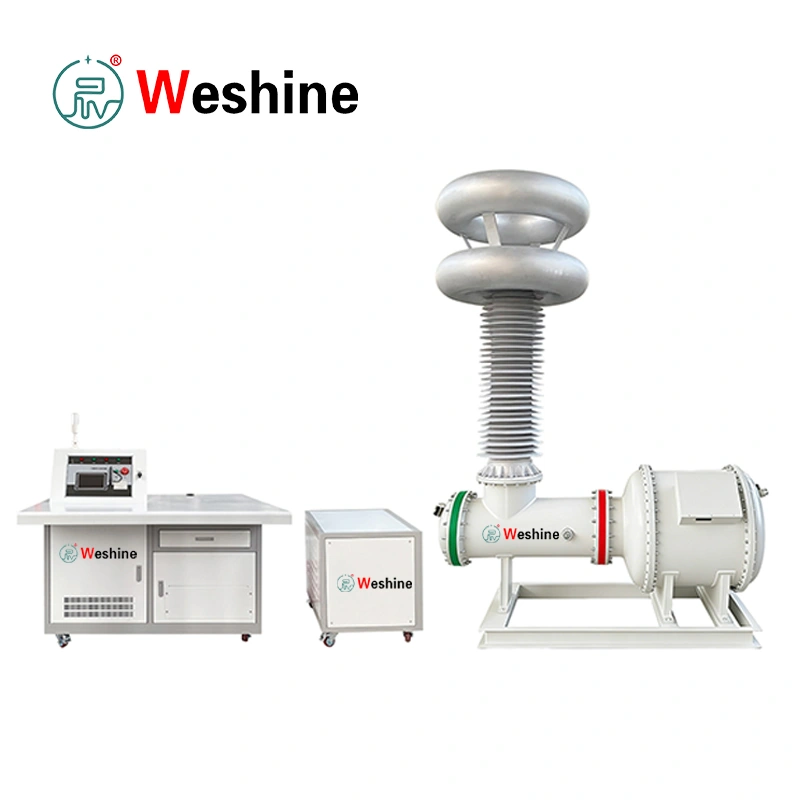
AC Hipot Testing
AC hipot testing applies alternating voltage to the test object.
AC testing is widely used for electrical equipment where the applicable test standard specifies an alternating withstand voltage.
For example, switchgear, transformers, motors, electrical assemblies, and other AC-rated equipment may require AC dielectric testing.
An AC Hipot Tester can provide controlled AC voltage for applications that require an alternating test waveform.
AC testing can produce capacitive current in the test object. This becomes important when the object has significant capacitance.
Large test objects can therefore require substantial reactive power from the test system.
This factor can affect the required transformer capacity, test power supply, and overall system configuration.
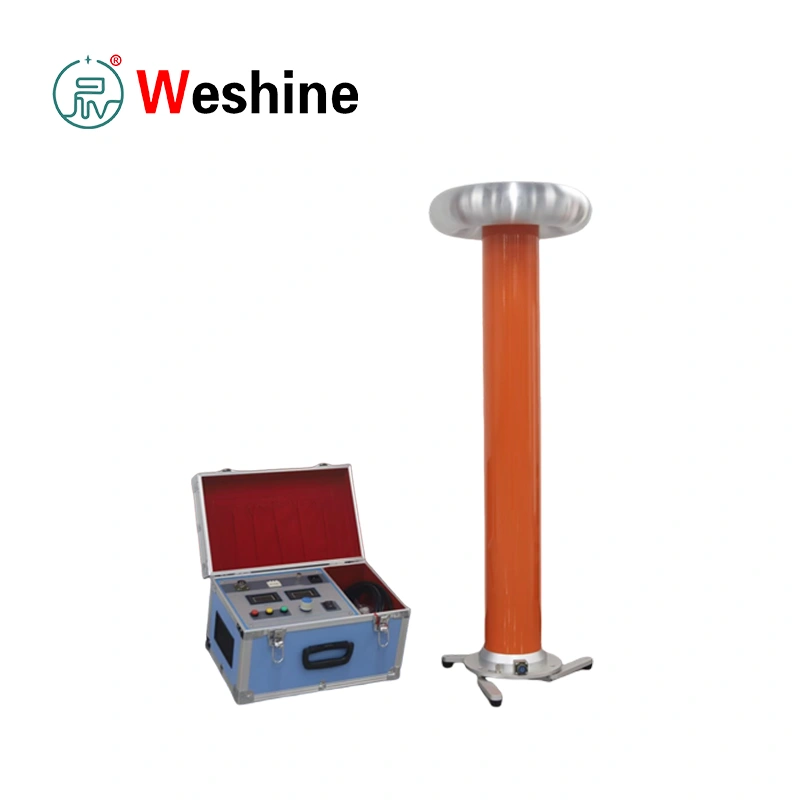
DC Hipot Testing
DC hipot testing applies direct voltage to the test object.
DC systems can require less apparent power than equivalent AC systems for certain highly capacitive loads. This can make them useful in selected field and laboratory applications.
However, DC testing is not a universal replacement for AC testing.
Some insulation systems respond differently under DC stress. Space charge and charge accumulation can also influence test behavior.
Therefore, the test method should follow the relevant standard and equipment manufacturer’s requirements.
A DC Hipot Tester may suit applications where a direct-voltage dielectric test is specified.
VLF Hipot Testing
Very Low Frequency, or VLF, testing uses an AC waveform at a frequency much lower than conventional power frequency.
VLF systems are particularly relevant to field testing of medium-voltage cables.
The lower frequency reduces the capacitive current associated with long cable systems. This can reduce the reactive power requirement compared with conventional power-frequency AC testing.
A VLF Hipot Tester can therefore provide a practical approach for certain cable testing applications.
VLF testing still requires the correct test procedure and acceptance criteria.
The frequency, waveform, voltage, duration, and test method should match the applicable cable standard or commissioning procedure.
AC, DC, and VLF Comparison
| Test Method | Voltage Type | Common Application Direction | Main Consideration |
|---|---|---|---|
| AC Hipot | Alternating voltage | Electrical equipment and assemblies | Reactive current can become significant |
| DC Hipot | Direct voltage | Selected insulation and field applications | Insulation response differs from AC |
| VLF Hipot | Very low frequency AC | Selected medium-voltage cable testing | Requires appropriate cable test procedure |
Table 2. General comparison of AC, DC, and VLF hipot testing
This table provides a general comparison rather than a substitute for the applicable test standard.
Which Electrical Equipment Can Be Tested With a Hipot Tester?
Hipot testing applies across many electrical manufacturing and maintenance applications.
The exact test method depends on the product and insulation system.
Transformers
Transformer insulation systems can require dielectric testing during manufacturing, commissioning, or maintenance.
Testing may involve windings, insulation barriers, bushings, and other components.
The applicable transformer standard determines the test voltage, waveform, duration, connections, and acceptance criteria.
A transformer test can involve significant capacitance and inductance. The test equipment therefore needs appropriate voltage and power capacity.
Motors and Generators
Motors and generators use insulation systems between windings and other conductive parts.
A hipot test can help verify dielectric withstand characteristics.
The test voltage should follow the applicable motor or generator standard and manufacturer procedure.
Operators should also consider whether other tests, including insulation resistance or partial discharge measurements, are required.
Switchgear
Switchgear contains multiple conductive paths separated by insulation.
Dielectric testing can evaluate the insulation between phases, between circuits, and between conductive parts and ground.
The configuration requires careful isolation because multiple components may remain electrically connected.
Cables
Cable testing requires particular attention to capacitance.
Long cables can present a substantial capacitive load during AC testing.
This is one reason field cable testing may use specialized test methods.
The selected test method should match the cable construction and applicable standard.
Electrical Appliances and Assemblies
Low-voltage electrical products may undergo routine or type testing.
IEC 61180 applies to dielectric tests for equipment with rated voltage up to 1 kV AC or 1.5 kV DC. It covers both test methods and test equipment requirements.
Manufacturers can integrate dielectric testing into production lines when the test procedure supports routine production verification.
What Parameters Should Buyers Check When Selecting a Hipot Tester?
Selecting a High Voltage Test Equipment system requires more than checking the maximum voltage.
The machine should match the electrical characteristics of the test object and the required test procedure.
Maximum Test Voltage
Maximum output voltage is one of the first specifications buyers review.
However, the required voltage should come from the test standard or approved procedure.
A machine with a much higher maximum voltage may not provide any practical benefit if the application requires a lower voltage.
Buyers should also check voltage accuracy, stability, ramp control, and measurement resolution.
Output Capacity
Voltage alone does not define system capacity.
The test object may draw current or reactive current during the test.
For capacitive loads, output capacity can become a major design consideration.
A supplier should therefore evaluate the test object’s electrical characteristics before recommending a system.
Leakage Current Measurement
Leakage current is a critical measurement in many dielectric withstand tests.
The tester should measure current accurately enough for the specified acceptance criteria.
The trip function should also provide appropriate protection against excessive current.
Test Duration
Test duration should follow the applicable procedure.
The instrument should provide a stable timer and clear indication of the test state.
Automated test sequences can help reduce operator errors during repeated production testing.
Measurement Accuracy
Measurement accuracy matters when test limits are narrow.
IEC 61180 includes requirements related to measurement systems and measurement uncertainty.
Buyers should therefore request technical information about voltage measurement accuracy, current measurement accuracy, calibration, and verification procedures.
Safety Interlocks
A high-voltage test system should include suitable safety provisions.
Depending on the system, these may include:
- Emergency stop
- Door or enclosure interlock
- Warning indicators
- Grounding provisions
- Discharge circuit
- Output enable control
- Test-area access control
- Zero-start protection
The exact safety configuration depends on the equipment design and application.
How Should Companies Select the Right Hipot Tester?
The best equipment selection process begins with the test object.
A procurement team should define the test voltage, waveform, load characteristics, test duration, current criteria, test frequency, and applicable standard.
The team should then compare equipment against these requirements.
Step 1: Define the Test Object
Start by identifying what will be tested.
Is it a cable, transformer, motor, switchgear assembly, electrical appliance, insulator, or another component?
The answer determines many subsequent parameters.
Step 2: Define the Test Voltage
Confirm the required test voltage from the applicable standard.
Do not select the voltage based only on the equipment’s rated operating voltage.
The test voltage can depend on insulation class, product type, test stage, and standard.
Step 3: Select the Waveform
Determine whether the procedure requires AC, DC, VLF, or another waveform.
For example, a cable field test may require a VLF method.
A factory production test may require AC or DC dielectric testing.
Step 4: Evaluate the Load
Estimate the test object’s capacitance, leakage characteristics, and expected current.
This information helps determine the required output capacity.
Step 5: Review Measurement Requirements
Check voltage measurement, leakage current measurement, timer accuracy, trip response, and data recording.
Step 6: Review Safety Requirements
Confirm that the test system supports the site’s safety procedures.
OSHA requires employers conducting high-voltage or high-power testing in covered applications to establish safe work practices. These practices include test-area safeguarding, grounding, safe use of measuring and control circuits, and periodic safety checks.
Why Is Safety Critical During Hipot Testing?
A hipot test intentionally applies hazardous voltage.
The test area must therefore prevent unauthorized access and accidental contact.
This is not simply a product feature issue. It is an operational requirement.
OSHA’s requirements for covered high-voltage testing address safeguarding, grounding, control circuits, and employee training. Test areas must control access to equipment that could become energized during testing.
Establish a Controlled Test Area
The test area should have clear boundaries.
Only authorized personnel should enter during the test.
Warning signs, barriers, interlocks, and other safeguards should match the test system and workplace procedures.
Verify Grounding
Grounding is a fundamental part of high-voltage testing.
The test object and equipment grounding arrangement should follow the approved test procedure.
Incorrect grounding can create severe hazards and can also affect test validity.
Discharge After Testing
A test object can retain electrical charge after the high voltage is removed.
This is especially important for capacitive objects, including long cables and some electrical assemblies.
The equipment should provide an appropriate discharge method.
The operator should verify that the test object has reached a safe state before approaching it.
Use Qualified Personnel
High-voltage testing requires appropriate training and competence.
Personnel should understand the equipment, test procedure, hazards, emergency response, and site safety rules.
OSHA requires training in safe work practices for employees assigned to covered high-voltage test areas.
How Is a Hipot Test Different From an Insulation Resistance Test?
Hipot testing and insulation resistance testing both evaluate insulation, but they answer different questions.
An insulation resistance test typically applies a DC voltage and measures resistance.
A hipot test applies a specified high voltage and evaluates whether the insulation withstands that electrical stress.
The two tests can complement each other.
For example, a manufacturer may use insulation resistance testing to identify general insulation condition and then perform a dielectric withstand test as required by the product standard.
Neither test should automatically replace the other.
The correct test sequence depends on the equipment and applicable standard.
Insulation Resistance Testing
Insulation resistance testing provides a resistance value.
The result can help identify contamination, moisture, degradation, or other insulation conditions.
The test voltage is usually much lower than a dielectric withstand voltage.
Dielectric Withstand Testing
A hipot test evaluates the insulation’s ability to withstand a defined high-voltage stress.
The acceptance criterion may involve leakage current, absence of breakdown, or other specified conditions.
The test is therefore focused on withstand performance rather than simply obtaining a high resistance reading.
What Is the Difference Between Hipot Testing and Partial Discharge Testing?
Partial discharge testing detects localized electrical discharges that do not completely bridge the insulation.
IEC 60270 defines methods for measuring partial discharges in electrical apparatus, components, or systems.
A hipot test and partial discharge test therefore have different purposes.
Hipot testing asks whether the insulation can withstand the specified test voltage.
Partial discharge testing looks for localized discharge activity within the insulation system.
In some advanced diagnostic programs, both tests may provide useful information.
For example, a manufacturer may use a dielectric withstand test as part of production verification and partial discharge testing for deeper insulation-system assessment.
The applicable product standard determines whether either test is required.
What Are Common Hipot Testing Errors?
Many test problems result from incorrect setup rather than equipment failure.
One common mistake is selecting the test voltage without checking the applicable standard.
Another is ignoring the capacitance of the test object.
A third is using an unsuitable test waveform.
A fourth is failing to discharge the test object after testing.
Incorrect Voltage Selection
The test voltage should come from the relevant technical specification.
Using an arbitrary voltage can produce an invalid result or damage the test object.
Incorrect Current Limit
The current trip level should match the test procedure.
A limit that is too low may create unnecessary failures.
A limit that is too high may reduce the protective function of the test.
Poor Test Connections
Loose or incorrect connections can produce unstable measurements.
The connection diagram should be verified before applying high voltage.
Ignoring Environmental Conditions
Temperature, humidity, surface contamination, and other environmental factors can influence insulation behavior.
Some standards specify environmental conditions or correction procedures.
IEC 60060-1 addresses high-voltage test requirements and includes considerations for dielectric testing under specified conditions.
Skipping Calibration
Measurement systems should remain within their required accuracy.
Calibration and verification should follow the equipment’s quality system and applicable requirements.
A test result has limited value if the measurement system cannot demonstrate adequate accuracy.
How Can Manufacturers Integrate Hipot Testing Into Production?
Production testing requires repeatability.
A factory may test hundreds or thousands of units during a production period.
Manual parameter entry can increase the risk of inconsistent settings.
Automated test sequences can improve repeatability when properly configured.
Standardize Test Parameters
Each product model should have an approved test procedure.
The procedure can define:
- Test voltage
- Waveform
- Frequency
- Ramp time
- Hold time
- Leakage current limit
- Trip condition
- Test connection
- Acceptance criteria
The operator should select the correct procedure for the product under test.
Record Test Results
Digital systems can record voltage, current, duration, and pass/fail status.
This information can support production traceability.
For regulated products, the required records should follow the applicable quality system and product standard.
Use Interlocks in Production Lines
Automated systems should prevent test initiation when the test area is not secured.
Interlocks can reduce the risk of accidental access during high-voltage application.
The exact safety architecture should match the production environment and risk assessment.
How Does Hipot Equipment Support Different Industrial Applications?
The required test configuration changes significantly between industries.
Electrical Equipment Manufacturing
Manufacturers may use hipot systems for routine production testing.
The equipment must support repeatable settings and reliable measurement.
Power Equipment Testing
Transformers, switchgear, cables, and other power equipment may require higher-voltage systems with greater output capacity.
The test object’s capacitance and insulation structure become important design factors.
Laboratory Testing
Research laboratories may require flexible voltage, waveform, and measurement configurations.
They may also need data acquisition and specialized test fixtures.
Field Testing
Field equipment needs portability, rugged construction, and practical power requirements.
Cable testing can present large capacitive loads.
This is one reason VLF systems can be useful for selected field applications.
What Should Buyers Ask a Hipot Tester Supplier?
Technical specifications should come before price comparison.
A buyer should provide the supplier with enough information to recommend the appropriate configuration.
A useful technical inquiry should include:
| Requirement | Information to Provide |
|---|---|
| Test object | Cable, transformer, motor, switchgear, etc. |
| Rated voltage | Equipment operating voltage |
| Test voltage | Required dielectric test voltage |
| Waveform | AC, DC, VLF, or specified method |
| Test duration | Required hold time |
| Load | Capacitance or expected current |
| Frequency | Required test frequency |
| Current limit | Acceptance or trip requirement |
| Application | Factory, laboratory, field, or commissioning |
| Standards | Applicable IEC, IEEE, ASTM, or local standard |
| Environment | Indoor, outdoor, temperature, altitude, etc. |
| Data needs | Display, storage, export, communication |
Table 3. Technical information to provide when selecting a hipot test system
This information helps suppliers avoid making recommendations based only on the maximum voltage.
Ask About Measurement
Request information about voltage and current measurement accuracy.
Ask how the system handles calibration and verification.
Also confirm whether the instrument records test results.
Ask About Safety
Ask about interlocks, emergency stop functions, discharge systems, grounding arrangements, and test-area control.
The safety system should fit the intended working environment.
Ask About Service
Confirm documentation, spare parts, calibration support, technical assistance, and warranty terms.
For international buyers, also check export packaging, installation support, and technical communication.
FAQ About Hipot Testers
What is a hipot tester?
A hipot tester is an electrical test instrument that applies a controlled high voltage to evaluate whether an insulation system can withstand a specified dielectric stress. It may use AC, DC, VLF, or another specified test waveform.
What does hipot stand for?
Hipot is short for “high potential.” The term refers to high-potential or dielectric withstand testing.
What does a hipot tester measure?
Depending on the system, it can measure test voltage, leakage current, test duration, trip conditions, and breakdown events. Advanced systems may also record and export test results.
Is a hipot tester the same as a High Voltage Tester?
The terms can overlap. A hipot tester is a specific type of high-voltage test instrument designed for dielectric withstand testing. A broader High Voltage Tester category can include instruments for other high-voltage measurements and tests.
What is the difference between AC and DC hipot testing?
AC testing applies alternating voltage. DC testing applies direct voltage. The appropriate method depends on the test object and applicable standard. The two methods can produce different electrical stress and insulation responses.
When should I use a VLF hipot tester?
VLF systems are commonly considered for selected medium-voltage cable testing applications. The actual test method should follow the applicable cable standard or approved field procedure.
Can a hipot tester measure insulation resistance?
Not every hipot tester includes insulation resistance testing. Some integrated systems combine multiple functions. Buyers should confirm the instrument’s specifications before assuming that it provides both tests.
What voltage should I use for a hipot test?
The correct voltage depends on the equipment and applicable standard. It should not be selected from a generic rule. Always use the approved test procedure for the specific product.
Is hipot testing dangerous?
Yes. Hipot testing involves hazardous voltage and requires controlled procedures. Test areas should restrict access, provide appropriate grounding and safeguards, and use trained personnel. OSHA has specific requirements for covered high-voltage testing activities.
How long does a hipot test take?
The duration depends on the applicable standard and test procedure. Some tests use a defined voltage hold period, while production systems may also include ramping and discharge stages.
Why does a hipot test fail?
A failure can result from insulation defects, contamination, moisture, damaged components, incorrect connections, unsuitable test conditions, or an inappropriate test setup. The cause should be investigated before repeating the test.
How do I choose the right hipot tester?
Start with the test object, required voltage, waveform, load characteristics, test duration, current limit, applicable standard, safety requirements, and application environment. Then select equipment that meets those requirements.
What Should Be Included in a Hipot Tester Purchasing Specification?
A purchasing specification should define technical and operational requirements before suppliers submit quotations.
For example, a specification for a production dielectric test system may include the required AC or DC output, maximum voltage, voltage accuracy, leakage current range, timer, ramp control, safety interlocks, discharge function, and data interface.
A field cable test system may require different parameters.
The specification may instead focus on VLF output, cable capacitance, output capacity, portability, waveform quality, measurement accuracy, and field operating conditions.
This difference shows why buyers should not compare hipot testers only by maximum voltage.
Two systems with the same maximum voltage can have very different output capacity, measurement functions, safety architecture, and application suitability.
A clear purchasing specification gives suppliers a common technical basis for quotation.
About WESHINE
WESHINE supplies electrical testing equipment for manufacturers, laboratories, utilities, contractors, and other organizations that require high-voltage and electrical insulation testing solutions. Its product range covers AC, DC, and VLF high-voltage test systems for different testing applications.
As an electrical testing equipment supplier, WESHINE focuses on matching test equipment with the customer’s required voltage, waveform, load characteristics, measurement requirements, and working environment. This approach helps buyers evaluate equipment from a technical perspective rather than comparing maximum voltage alone.
For companies selecting High Voltage Test Equipment, the most important question is not simply how many kilovolts the instrument can generate. The selection should consider the test object, applicable standard, waveform, output capacity, leakage current measurement, safety system, test duration, data requirements, and service support.
References
- International Electrotechnical Commission, IEC 60060-1:2025, “High-voltage test techniques – Part 1: General terminology and test requirements.”
IEC 60060-1:2025 - International Electrotechnical Commission, IEC 61180:2016, “High-voltage test techniques for low-voltage equipment – Definitions, test and procedure requirements, test equipment.”
IEC 61180:2016 - International Electrotechnical Commission, IEC 60270, “High-voltage test techniques – Partial discharge measurements.”
IEC 60270 - U.S. Occupational Safety and Health Administration, “Testing and test facilities.”
OSHA 1910.269(o) - U.S. Occupational Safety and Health Administration, “Testing and test facilities.”
OSHA 1926.963

