






What Is the Purpose of High Voltage Testing in Electrical Systems?
August 27, 2026
What is the purpose of high voltage testing? High voltage testing checks whether electrical insulation can withstand the voltage stress expected during operation, commissioning, maintenance, or quality inspection. It helps identify insulation weakness, manufacturing defects, contamination, moisture, and damage before they cause electrical failure. For manufacturers, utilities, testing laboratories, and industrial facilities, high voltage testing provides measurable evidence that electrical equipment meets defined safety and performance requirements.
Electrical insulation can deteriorate even when equipment appears normal. Aging, thermal stress, mechanical damage, moisture, and electrical discharge can reduce insulation strength. A visual inspection may not reveal these conditions. High voltage testing applies a controlled electrical stress and measures the equipment response.
For example, a transformer may pass a visual inspection while its insulation system contains a hidden defect. A suitable withstand or diagnostic test can reveal abnormal leakage current or insulation behavior before the transformer enters service. The same principle applies to cables, switchgear, motors, generators, bushings, and other high-voltage components.
The purpose of high voltage testing therefore extends beyond simply applying a higher voltage. Engineers use different test methods to verify insulation strength, identify defects, assess equipment condition, and reduce the risk of electrical breakdown.
Why Is High Voltage Testing Necessary?
Electrical equipment operates under continuous voltage stress. Some systems also experience temporary overvoltages caused by switching operations, faults, lightning, or network disturbances.
Insulation must withstand these electrical stresses without breakdown. If insulation fails, the result can range from equipment damage to arc flash, fire, system interruption, or electric shock.
A high voltage test provides a controlled way to evaluate insulation performance before equipment faces real operating conditions.
Detecting Insulation Weakness
Insulation materials can develop defects during manufacturing, transportation, installation, or service.
Common causes include:
- Cracks and mechanical damage
- Moisture absorption
- Surface contamination
- Voids within insulation
- Improper assembly
- Thermal aging
- Electrical treeing
- Partial discharge activity
These defects may not produce visible signs during routine inspection.
A controlled test can place electrical stress on the insulation and provide measurable data for evaluation.
Verifying Manufacturing Quality
Electrical equipment manufacturers often perform dielectric tests during production.
For example, a cable manufacturer may test finished cable sections before shipment. A transformer manufacturer may conduct dielectric withstand tests as part of factory acceptance procedures.
Testing can help confirm that the insulation system meets the specified design requirements.
It can also help manufacturers identify production problems before equipment leaves the factory.
Supporting Safe Commissioning
Commissioning tests confirm that equipment remains suitable after installation.
Transportation and installation can introduce mechanical damage that did not exist during factory testing.
A commissioning program may therefore include insulation resistance measurements, dielectric withstand tests, or other diagnostic methods.
The selected method depends on equipment type, rated voltage, applicable standards, and the condition of the asset.
What Does a High Voltage Test Measure?
A high voltage test does not always produce the same type of measurement. Different test methods evaluate different electrical properties.
The test objective should determine the equipment and measurement method.
Withstand Voltage Testing
Withstand testing applies a specified voltage for a defined duration.
The purpose is to determine whether the insulation can tolerate the required electrical stress without breakdown.
A typical test evaluates whether the equipment remains electrically stable throughout the test period.
This method is widely used for production testing and acceptance testing.
Insulation Resistance Testing
Insulation resistance testing measures the resistance between conductive parts and ground or between separate conductors.
High resistance generally indicates stronger insulation isolation. A significant reduction can indicate moisture, contamination, aging, or physical damage.
Insulation resistance alone does not provide a complete condition assessment. Engineers often combine it with other measurements.
Partial Discharge Testing
Partial discharge, or PD, refers to localized electrical discharges that do not completely bridge the insulation between conductors.
PD can occur inside voids, along interfaces, or near defects. Repeated discharge activity can gradually damage insulation.
A partial discharge test can therefore provide diagnostic information that a basic withstand test may not reveal. This makes PD testing useful for equipment condition assessment and research applications.
Leakage Current Measurement
Leakage current provides another indication of insulation behavior. During a voltage test, engineers can monitor current and observe how it changes with applied voltage. Abnormal current behavior may indicate insulation defects or other problems. The acceptable value depends on the equipment design, test method, voltage level, and applicable standard.
Which Equipment Requires High Voltage Testing?
High voltage testing applies across many electrical industries. The specific method depends on the equipment’s rated voltage, insulation system, construction, and application.
| Equipment | Typical Test Objective | Common Test Methods |
|---|---|---|
| Power transformers | Verify insulation strength and condition | AC withstand, DC tests, PD testing |
| Power cables | Check dielectric integrity | AC withstand, VLF, insulation tests |
| Switchgear | Verify insulation and clearances | Power-frequency withstand, impulse tests |
| Motors | Evaluate winding insulation | Insulation resistance, withstand testing |
| Generators | Assess stator insulation | AC withstand, PD testing |
| Bushings | Evaluate dielectric performance | AC withstand, capacitance, PD |
| Circuit breakers | Verify insulation system | Withstand and insulation tests |
| Capacitors | Check dielectric integrity | Withstand and insulation tests |
Caption: Common electrical equipment categories and their high voltage testing objectives.
Transformers
Transformers contain several insulation systems. These include winding insulation, inter-layer insulation, bushings, and insulation between windings and ground. A transformer test program may include dielectric withstand testing and partial discharge measurements. The selected test voltage and duration should follow the applicable standard and transformer design.
Power Cables
Cable insulation must withstand operating voltage and temporary electrical stress. Cable testing can occur during manufacturing, installation, commissioning, and maintenance. Different cable systems may require different testing approaches.
For example, medium-voltage cable systems may use very-low-frequency testing during field maintenance. High-voltage cable systems may require more advanced diagnostic methods.
Switchgear and Circuit Breakers
Switchgear relies on insulation to maintain electrical separation between conductors and grounded structures. High voltage testing can verify insulation clearances and the condition of insulating components. For circuit breakers, testing may also assess insulation across open contacts.
Motors and Generators
Windings require insulation between conductors and grounded components.
Insulation deterioration can occur because of heat, vibration, contamination, electrical stress, and operating cycles.
A suitable test program can help identify insulation problems before they lead to winding failure.
How Does High Voltage Test Equipment Work?
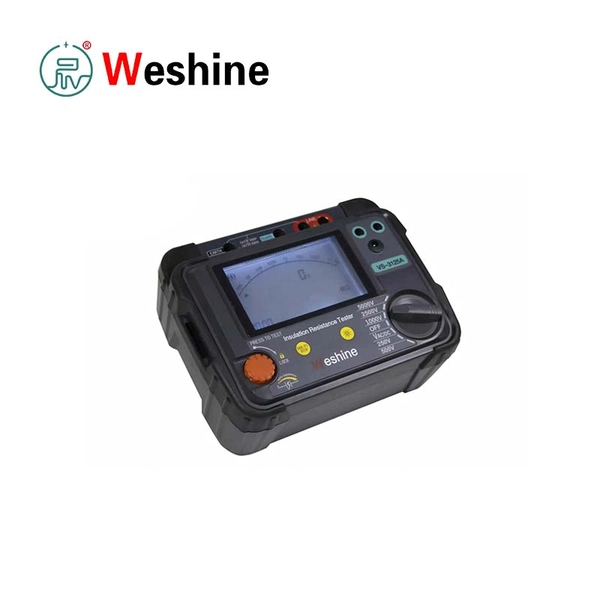
A High Voltage Tester generates a controlled test voltage and applies it to the equipment under test. The complete system must control voltage, current, test duration, grounding, measurement, and protection. For laboratories, manufacturers, utilities, and maintenance teams evaluating different testing configurations, high voltage testing equipment provides the broader system category covering high-voltage sources, measurement units, control systems, and related test accessories.
High Voltage Source
The high voltage source generates the required test voltage.
Depending on the application, the system may generate AC, DC, very-low-frequency AC, impulse, or other specialized waveforms.
The required output depends on the equipment under test and applicable testing standard.
Measurement System
The measurement system monitors electrical parameters during testing.
Typical parameters include:
- Output voltage
- Leakage current
- Test duration
- Partial discharge
- Capacitance
- Dissipation factor
Modern systems can record test data for later analysis and reporting.
Control System
The control system allows operators to configure the test sequence.
Typical functions include voltage adjustment, automatic ramping, test timing, protection settings, and emergency shutdown.
Automated control can improve repeatability when operators perform multiple tests under similar conditions.
Safety System
High voltage testing requires controlled access and protective measures.
A test system should provide suitable grounding, interlocks, emergency shutdown functions, warning indicators, and discharge procedures.
Operators must follow the relevant workplace electrical safety requirements and equipment manufacturer’s instructions.
What Are the Main Types of High Voltage Tests?
Different test methods serve different engineering objectives. Selecting the wrong test can produce misleading results or place unnecessary stress on the equipment.
AC High Voltage Testing
AC withstand testing applies alternating voltage to the equipment under test.
It can simulate the power-frequency electrical stress experienced during normal operation.
AC testing is widely used for transformers, switchgear, cables, motors, generators, and other electrical equipment.
The test voltage and duration depend on the applicable standard and equipment rating.
DC High Voltage Testing
DC testing applies direct voltage to the insulation system. It can support specific diagnostic and withstand applications.
However, engineers should not assume that a DC test provides the same information as an AC test.
The electrical field distribution can differ between AC and DC conditions. The appropriate method depends on the insulation system and testing requirements.
Very Low Frequency Testing
Very-low-frequency, or VLF, testing uses a low-frequency AC waveform.
It can reduce the power requirement for certain field cable tests compared with conventional power-frequency AC systems.
VLF testing is commonly associated with medium-voltage cable maintenance and commissioning.
Impulse Testing
Impulse testing evaluates equipment under short-duration high-voltage surges.
The test can simulate transient electrical stresses associated with lightning or switching events.
Impulse testing is particularly relevant to power equipment with insulation systems designed to withstand transient overvoltages.
Partial Discharge Testing
Partial discharge testing focuses on localized electrical activity within an insulation system.
Engineers can analyze discharge magnitude, phase position, repetition rate, and other characteristics.
The results can provide information about insulation defects that may develop into more serious failures.
How Should Engineers Select a High Voltage Tester?
Selecting a High Voltage Tester requires more than checking the maximum output voltage.
The tester should match the equipment under test, test method, measurement requirements, and operating environment.
Determine the Required Test Voltage
Start with the equipment rating and applicable standard.
Do not select the test voltage only according to the highest output available from the instrument.
The test voltage should follow the specified test procedure.
Excessive voltage can create unnecessary stress and may damage equipment that does not require such a level.
Select the Correct Waveform
The waveform matters because AC, DC, VLF, and impulse tests create different electrical stress conditions.
The application should determine the waveform.
For example, a cable maintenance program may require VLF testing, while a transformer dielectric test may require AC withstand testing.
Check Measurement Functions
A basic test may only require voltage and current monitoring.
A diagnostic application may require partial discharge, capacitance, or dissipation factor measurements.
The measurement system should therefore match the required diagnostic depth.
Consider Output Capacity
Voltage alone does not define system capacity.
Test equipment also needs sufficient current and power capability for the test object.
Large transformers, long cables, and capacitive loads can place substantial demands on the test source.
Engineers should calculate the expected load before selecting equipment.
Review Safety and Automation
High voltage systems require appropriate safety functions.
Useful functions can include:
- Zero-start interlock
- Overcurrent protection
- Overvoltage protection
- Emergency shutdown
- Automatic voltage ramping
- Test-time control
- Discharge control
- Grounding verification
Automation can also reduce operator workload during repeated test sequences.
How Can High Voltage Testing Improve Maintenance Decisions?
High voltage testing can support condition-based maintenance when engineers interpret test results alongside operating history.
A single test result rarely tells the complete story.
Trend analysis is often more useful.
For example, suppose a transformer records stable insulation measurements for several years. A later test shows a significant change.
The change may justify additional investigation.
Engineers can compare the new result with previous measurements, operating conditions, temperature, maintenance records, and other diagnostic data.
This approach can help distinguish temporary variations from developing insulation problems.
Example: Cable Maintenance
Consider a medium-voltage cable system that has operated for several years.
A maintenance team records insulation test results during scheduled inspections.
If the measurements show a gradual decline, engineers can increase diagnostic testing or investigate the cable route.
The objective is not simply to obtain a pass or fail result.
The objective is to understand whether the insulation condition is changing.
Example: Transformer Commissioning
A new transformer may pass factory inspection before shipment.
After transportation and installation, the commissioning team performs additional tests.
If the results differ significantly from factory records, engineers can investigate potential transportation or installation issues.
This creates a useful reference point for future maintenance.
How Do Standards Influence High Voltage Testing?
High voltage testing should follow the standard applicable to the equipment and test objective.
International and national standards define test methods, voltage levels, durations, measurement procedures, acceptance criteria, and safety considerations.
IEC standards cover many categories of electrical equipment and testing procedures.
For example, IEC 60060 addresses high-voltage test techniques. IEC 60076 covers power transformers. Other standards address cables, switchgear, rotating electrical machines, and specific equipment classes.
The correct standard depends on the equipment and application.
Engineers should therefore identify the applicable standard before configuring the test.
Using a generic test voltage without considering the relevant standard can produce an invalid test program.
For organizations operating across multiple markets, documentation should also identify the standard edition and test conditions used for each test.
FAQ About High Voltage Testing
What is the main purpose of a high voltage test?
The main purpose is to verify electrical insulation performance under controlled voltage stress. Testing can identify insulation weakness, manufacturing defects, contamination, moisture, aging, and other conditions that may increase failure risk.
What is a High Voltage Tester used for?
A High Voltage Tester generates and applies controlled electrical voltage to an equipment under test. Depending on its design, it may also measure leakage current, insulation response, partial discharge, or other electrical parameters.
What is High Voltage Test Equipment?
High Voltage Test Equipment refers to systems used to generate, control, measure, and monitor high electrical voltages during testing. The equipment can support AC, DC, VLF, impulse, withstand, and diagnostic testing.
Is high voltage testing the same as insulation resistance testing?
No. Insulation resistance testing measures electrical resistance through or across an insulation system. High voltage withstand testing evaluates whether insulation can tolerate a specified voltage for a defined period. The two tests have different objectives.
Why is partial discharge testing important?
Partial discharge testing can detect localized electrical activity within insulation. Repeated discharge can contribute to insulation deterioration. PD measurements can therefore provide useful diagnostic information.
How often should electrical equipment undergo high voltage testing?
The testing frequency depends on equipment type, applicable standards, operating conditions, maintenance policies, and asset condition. Manufacturers and asset owners should establish test intervals according to the relevant technical requirements.
Can high voltage testing damage electrical equipment?
A correctly specified test should stay within the limits established for the equipment and applicable standard. An incorrectly selected voltage, duration, waveform, or test method can create unnecessary stress. Engineers should follow the relevant testing procedure.
What should I consider when buying high voltage test equipment?
Consider maximum test voltage, output capacity, waveform, measurement functions, load characteristics, automation, safety functions, applicable standards, data recording, and the type of equipment you need to test.
About WESHINE
WESHINE provides electrical testing instruments and high voltage testing solutions for power utilities, electrical manufacturers, testing laboratories, research institutions, and industrial users. Its product range covers high voltage test systems and related electrical diagnostic equipment for different testing requirements. WESHINE supports customers in selecting test configurations according to voltage level, test object, measurement requirements, applicable standards, and operating conditions.
For organizations that need to establish or upgrade laboratory and field testing capabilities, WESHINE focuses on practical test-system configuration and electrical measurement requirements rather than applying a one-size-fits-all approach.
References
International Electrotechnical Commission. IEC 60060 series: High-voltage test techniques. The series establishes general principles and requirements for high-voltage testing. IEC 60060
International Electrotechnical Commission. IEC 60076 series: Power transformers. The series covers requirements and testing methods for power transformers. IEC 60076
IEEE Standards Association. IEEE develops standards covering electrical power systems, equipment, testing, and measurement practices. IEEE Standards
U.S. Occupational Safety and Health Administration. OSHA provides requirements and guidance related to electrical safety and work practices. Electrical Safety

