






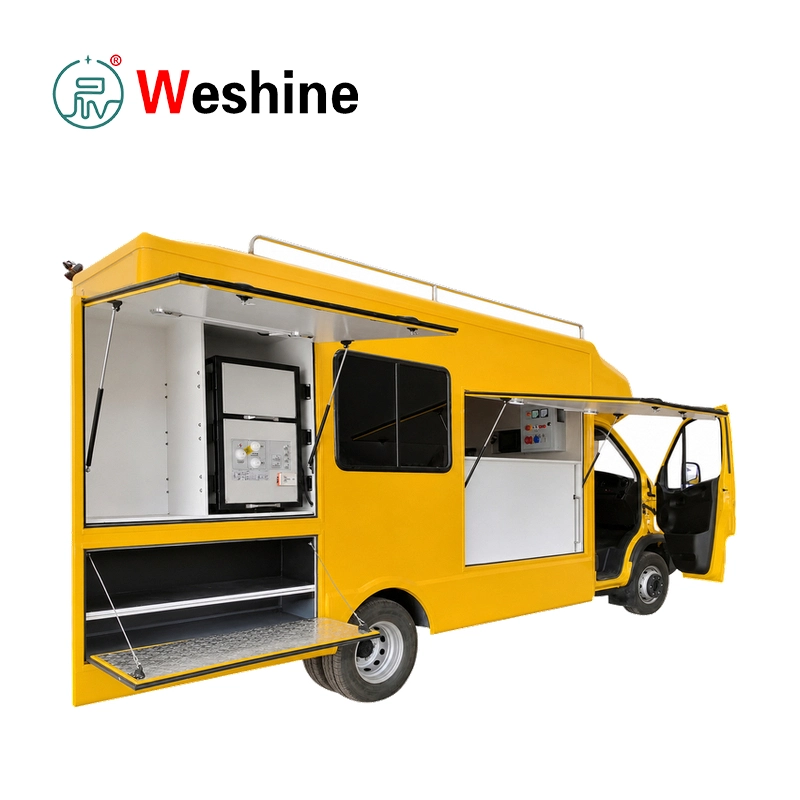


Power Cable Test Van | VS-35kV
Products Details
Medium-voltage cable faults often occur in complex field environments, such as underground distribution networks, industrial parks, substations, tunnels, railway power lines, and urban cable corridors. A single fault may require several different test methods: insulation assessment, fault type judgment, high-voltage surge discharge, waveform-based distance measurement, cable path tracing, acoustic-magnetic pinpointing, and final cable identification before cutting or repair. Moving separate instruments to the site can increase setup time and make the test process harder to manage.
The VS-35kV Power Cable Test Van is built as a mobile cable test platform for these field conditions. It integrates a vehicle-mounted cable fault location system, high-voltage output unit, cable fault distance measuring unit, digital burning bridge, VLF withstand voltage tester, precise cable fault pinpointer, insulation resistance tester, cable route tracer, live cable identifier, dedicated test software, accessories, and workstation control area. This configuration allows the test team to perform both diagnosis and verification work from one organized vehicle system.
For fault pre-location, the system supports multiple cable fault testing methods, including multiple pulse method, arc reflection-related methods, flashover methods, pulse current method, pulse voltage method, and low-voltage pulse method. These methods help analyze low-resistance short-circuit faults, open-circuit faults, high-resistance leakage faults, high-resistance flashover faults, low-resistance grounding faults, and cable break faults. The system can store waveforms and support report export through USB.
For high-voltage cable fault work, the integrated high-voltage output unit provides adjustable surge output ranges of 0-32 kV, 0-16 kV, and 0-8 kV, with corresponding built-in capacitor settings. It can be used for surge discharge during cable fault location and for DC withstand testing. Automatic discharge, zero-start protection, emergency stop, and high-voltage safety key functions are included to support controlled field operation.
For final location, the precise cable fault pinpointer uses acoustic and magnetic signal detection. After the surge generator creates a flashover discharge at the fault point, the pinpointer receives the acoustic and magnetic signals, calculates the time difference, and helps the operator locate the fault position visually and audibly. It also supports step voltage fault location for single-core cable sheath faults.
The VS-35kV is not limited to fault repair. It also supports preventive testing and cable acceptance work. The included 50 kV VLF withstand voltage tester can be used for ultra-low-frequency cable withstand testing, while the insulation resistance tester supports insulation resistance, absorption ratio, polarization index, and quick insulation checks. For cable management and safe operation, the cable route tracer and live cable identifier help confirm cable route, depth, target cable identity, and the risk of wrong cable cutting.
This mobile configuration is practical for organizations that maintain many cable circuits across a wide service area. Instead of assembling instruments separately for each site, the test van keeps the core tools, accessories, software, control workstation, and high-voltage connections organized in one platform. This improves response speed, field consistency, and test record management during routine maintenance and emergency fault handling.
Specification
Technical Parameters
| Item | Specification |
| Product model | VS-35kV |
| Product type | Power Cable Test Van / Cable Fault Location Test Vehicle |
| Main functions | Insulation resistance test, DC test, sheath test, breakdown voltage identification, cable fault pre-location, surge discharge, step voltage output, burning conversion |
| Vehicle-mounted computer display | 12-inch LCD |
| Computer CPU | Intel Core i5 quad-core, 3.0 GHz or above |
| Computer memory | DDR4 8 GB, 2133 MHz |
| Computer storage | 120 GB solid-state drive |
| igh Voltage Output Unit | Specification |
| Reference standards stated in manual | DL/T 846-2016, DL/T 474-2016 |
| Surge high voltage | 0-32 kV, 0-16 kV, 0-8 kV, three ranges |
| Voltage divider accuracy | Class 1.5 |
| Built-in capacitor | 4 uF / 32 kV, 16 uF / 16 kV, 64 uF / 8 kV |
| Discharge energy | 2048 J |
| Automatic surge interval | About 5 s |
| Manual surge | Controlled manually |
| Surge power | 2 kVA |
| Power supply | AC 220 V ±10%, 50 Hz ±2 Hz |
| Operating temperature | -20°C to +50°C |
| Cable Fault Distance Measuring Unit | Specification |
| Applicable fault voltage range | Faults that can discharge under 0-32 kV |
| Surge withstand capability of pulse generator | Not less than 45 kV |
| Sampling frequency | 400 MHz |
| Test distance | >60 km |
| Test methods | Multiple pulse method, flashover method, low-voltage pulse method and related modes |
| Reading resolution | 0.1 m |
| System distance accuracy | <0.2 m |
| Cable wave velocity setting | Custom 50-300 m/us |
| Built-in common wave velocities | Not less than 3 types |
| Auto positioning | Pulse waveform auto-recognition and cursor auto-positioning |
| Data storage | Stores field test waveforms for later review |
Precise Cable Fault Pinpointer
| Display | 5-inch high-brightness touch LCD |
| Test modes | Standard, enhanced, noise reduction, custom |
| Location methods | Acoustic, magnetic, acoustic-magnetic synchronization, voltage method |
| Filter range | Full pass: 100-1600 Hz; band pass: 200-600 Hz; low pass: 100-300 Hz; high pass: 160-1600 Hz |
| Channel adjustment | Acoustic, magnetic, voltage, 8 levels adjustable |
| Audio output gain | 16 levels, 0-112 dB |
| Audio output impedance | 350 ohm |
| Detection range | 0.00-99.99 ms, 75 mV-75 V |
| Location accuracy | ≤0.1 m |
| Step voltage accuracy | ≤0.5 m |
| Route accuracy | ≤0.5 m |
| Power supply | 4 x 18650 lithium batteries |
| Standby time | >8 hours |
| Operating temperature | -25°C to +65°C |
| Relative humidity | ≤90% |
| Dimensions | 428 mm L × 350 mm W × 230 mm H |
| Weight | 7 kg |
| Sensor protection | IP65 sensor stated in manual |
Insulation Resistance Tester
| Output voltage | DC 500 V / 1000 V / 2500 V / 5000 V |
| Short-circuit current | >5 mA |
| 500 V range | 1 Mohm to 50 Gohm |
| 1000 V range | 2 Mohm to 100 Gohm |
| 2500 V range | 5 Mohm to 500 Gohm |
| 5000 V range | 10 Mohm to 1000 Gohm |
| Operating temperature | -10°C to +50°C |
| Relative humidity | ≤75% RH |
| Battery | Built-in 2600 mAh rechargeable lithium battery pack |
| Digital Burning Bridge | Specification |
| Burning output voltage | 0-60 kV |
| Burning output current | 400 mA |
| Bridge mode voltage | 0-4 kV |
| Bridge mode output current | 750 mA |
| Power | 2 kVA |
Vehicle System Reference Configuration
| Vehicle System Reference Configuration | Quantity |
| Dedicated test software system | 1 set |
| High-voltage output unit | 1 unit |
| Cable fault distance measuring unit | 1 unit |
| Digital burning bridge | 1 unit |
| 50 kV VLF withstand voltage tester | 1 unit |
| Precise cable fault pinpointer | 1 unit |
| 5 kV insulation resistance tester | 1 unit |
| Cable route tracer | 1 unit |
| Cable identifier | 1 unit |
| Accessories including high-voltage output cable, ground wire, and power cable | 1 set |
| Workbench and control console | 1 set |
Cable Route Tracer
| Cable Route Tracer | Specification |
| Receiver frequencies | 640 Hz, 1.28 kHz, 2.56 kHz, 3.20 kHz, 4.09 kHz, 8.19 kHz, 10.2 kHz, 32.7 kHz, 65.6 kHz, 81.9 kHz, 197 kHz |
| Test methods | Built-in receiving coil, flexible clamp, A-frame |
| Audio indication | Frequency-modulated tone changes with signal strength |
| Display | 4.3-inch high-brightness color LCD |
| Coil inner diameter | 200 mm |
| VLF Withstand Voltage Tester | Specification |
| Rated output voltage | 50 kV |
| Output frequency | 0.1 Hz, 0.05 Hz, 0.02 Hz |
| Load capacity at 0.1 Hz | Max. 1.1 uF |
| Load capacity at 0.05 Hz | Max. 2.2 uF |
| Load capacity at 0.02 Hz | Max. 5.5 uF |
| Measurement accuracy | 3% |
| Positive/negative peak voltage error | ≤3% |
| Voltage waveform distortion | ≤5% |
Live Cable Identifier
| Working frequency | 625 Hz, 1562 Hz, 2500 Hz, 10000 Hz |
| Output voltage | 12 V |
| Maximum current | 10 A |
| Test methods | Direct connection, coupling |
| Clamp diameter | 105 mm / 250 mm |
| Audio indication | Signal strength and polarity |
| Display | 3.5-inch color LCD |
Product Guide
The VS-35kV Power Cable Test Van is intended for a complete cable fault handling workflow. Before testing, the cable circuit should be safely isolated according to site procedures, and the operator should confirm the cable route, voltage class, grounding condition, and available fault information. The test team should select the correct test method according to the suspected fault type, such as low-resistance fault, open circuit, high-resistance leakage fault, flashover fault, sheath fault, or uncertain fault.
For initial diagnosis, insulation resistance testing can be performed to evaluate the basic insulation condition of the cable. The built-in insulation resistance tester provides DC 500 V, 1000 V, 2500 V, and 5000 V output options, allowing the operator to select a suitable test level according to the cable and site requirement. Absorption ratio and polarization index functions can support additional insulation condition assessment.
When the fault requires distance measurement, the cable fault distance measuring unit can be used with low-voltage pulse, flashover, pulse current, pulse voltage, or multiple pulse testing. For high-resistance and flashover faults, the high-voltage output unit provides controlled surge discharge. The system captures and displays fault waveforms so the operator can determine the approximate fault distance. Stored waveforms can be reviewed later and exported for reports.
After pre-location, the cable route tracer helps confirm the underground route and estimated cable position. This is important before field excavation because route uncertainty can increase repair time and site risk. The route tracer supports multiple receiving frequencies, built-in receiving coil, flexible clamp, and A-frame testing methods, helping operators adapt to different field conditions.
For exact fault location, the precise cable fault pinpointer is used near the pre-located area. With acoustic, magnetic, acoustic-magnetic synchronization, and voltage methods, the operator can identify the final fault point through displayed data and audio feedback. For single-core cable sheath faults, the step voltage method can be used to narrow the fault position.
Before cutting or repair, the live cable identifier can be used to confirm the target cable among multiple cables. This step is especially important in cable trenches, industrial sites, and distribution corridors where several cables may have similar appearance or unclear labeling. The identifier supports live cable identification, de-energized cable identification, AC current testing, and AC voltage testing.
After repair or installation, the 50 kV VLF withstand voltage tester can be used for cable withstand testing according to the selected test procedure. Test data, waveforms, and reports can be stored or exported through the system to support maintenance records and project documentation.
Features
- Supports insulation resistance testing, DC testing, sheath testing, fault pre-location, surge discharge, step voltage output, and fault burning conversion.
- Measures low-resistance, open-circuit, high-resistance leakage, high-resistance flashover, low-resistance grounding, and cable break faults.
- Provides adjustable high-voltage surge output at 0-32 kV, 0-16 kV, and 0-8 kV.
- Supports DC withstand testing and surge discharge for cable fault location.
- Includes automatic discharge, manual discharge, single pulse, periodic pulse, and DC operation modes.
- Provides multiple pulse method, flashover method, pulse current method, pulse voltage method, and low-voltage pulse method.
- Automatically samples discharge waveforms for cable fault distance analysis.
- Displays cable fault waveforms on a vehicle-mounted computer system.
- Stores test waveforms and supports USB report export.
- Provides precise fault pinpointing through acoustic, magnetic, acoustic-magnetic, and voltage methods.
- Detects single-core cable sheath faults through step voltage location.
- Supports digital burning bridge operation for converting high-resistance faults into lower-resistance faults.
- Provides cable route tracing, cable depth display, current display, and cable fault locating functions.
- Supports live and de-energized cable identification to reduce wrong-cable operation risk.
- Includes VLF withstand voltage testing up to 50 kV.
- Includes portable insulation resistance testing up to DC 5000 V.
- Provides integrated workstation, control console, accessories, and dedicated test software in the vehicle system.
Application Scenarios
The VS-35kV is suitable for emergency cable fault repair where rapid mobilization is required. When a medium-voltage feeder trips and the cable route is long or buried, the test van can bring high-voltage generation, fault pre-location, route tracing, precise pinpointing, and cable identification equipment directly to the site. This reduces dependence on separate instrument transport and helps the repair team follow a structured test process.
In utility cable maintenance, the vehicle can be used for routine cable inspection, sheath fault testing, DC testing, VLF withstand testing, and fault record management. It is practical for power supply companies that maintain many 10 kV, 20 kV, and 35 kV cable circuits across substations, residential districts, industrial parks, and urban distribution networks.
For industrial power systems, the VS-35kV supports fault diagnosis on plant feeders, mine power cables, railway power cables, port power supply cables, and large facility distribution networks. The combination of burning bridge, surge generator, and pre-location unit is useful when cable faults are high-resistance, unstable, or difficult to locate with only low-voltage pulse testing.
For construction and commissioning teams, the system can support acceptance testing after cable installation or repair. VLF withstand testing, insulation resistance measurement, and cable identification help verify that the cable circuit is correctly installed, properly identified, and ready for energization.
For cable service contractors, the integrated vehicle configuration supports a wider range of field jobs. The same vehicle can be used for fault search, route tracing, cable identification, sheath fault location, insulation diagnosis, and post-repair withstand testing, making it useful for customers who provide outsourced cable maintenance services.
Applications
The VS-35kV Power Cable Test Van is used by power utilities, transmission and distribution maintenance teams, industrial electrical departments, railway power maintenance units, mining companies, municipal cable operators, power engineering contractors, and electrical testing service providers. It is suitable for underground and overhead-to-underground medium-voltage cable networks where fast fault location and safe cable identification are required.
Typical tested equipment includes medium-voltage power cables, XLPE cables, distribution feeder cables, plant power supply cables, cable sheath systems, direct-buried cables, cable tunnel circuits, substation outgoing feeders, industrial cable lines, and long-distance power cable circuits. The system supports both fault repair and preventive maintenance work.
For international procurement and SEO positioning, the product can be described as a power cable test van, cable fault location vehicle, 35kV cable testing van, mobile cable fault locator system, cable fault test truck, cable route tracing vehicle, and medium-voltage cable diagnostic vehicle.
Customer Case
A municipal power maintenance department was responsible for several underground medium-voltage cable feeders supplying residential and commercial areas. During rainy season operation, one feeder experienced repeated trips, and preliminary checks indicated a possible high-resistance insulation fault. Because the cable route passed through road crossings and cable trenches, fast fault location was needed to reduce outage time and avoid unnecessary excavation.
The maintenance team dispatched the VS-35kV Power Cable Test Van to the site. First, insulation resistance testing was used to confirm abnormal insulation condition. The high-voltage output unit and cable fault distance measuring unit were then used for surge discharge and waveform-based fault pre-location. The multiple pulse method helped the operator read a clearer reflection waveform and estimate the fault distance.
After the approximate distance was determined, the team used the cable route tracer to confirm the actual underground path and then used the precise fault pinpointer in the suspected area. Acoustic-magnetic synchronization helped identify the final fault point, while the cable identifier was used before cable handling to confirm the correct target cable among several nearby circuits.
The repair team excavated only the confirmed section and found a damaged cable joint. After repair, the VLF withstand voltage tester and insulation resistance tester were used to verify the circuit before re-energization. The stored waveform data and test reports were exported for the department’s maintenance archive, supporting both fault analysis and future cable management.
FAQ
- What is the VS-35kV Power Cable Test Van used for?
It is used for medium-voltage cable fault location, cable testing, route tracing, precise fault pinpointing, cable identification, sheath fault location, insulation resistance testing, burning conversion, and VLF withstand voltage testing. - What cable fault types can the system test?
The system supports low-resistance short-circuit faults, open-circuit faults, high-resistance leakage faults, high-resistance flashover faults, low-resistance grounding faults, cable break faults, and sheath faults. - What is the surge output voltage range?
The high-voltage output unit provides three adjustable surge ranges: 0-32 kV, 0-16 kV, and 0-8 kV. The corresponding stored discharge energy is 2048 J. - Does the system support VLF withstand testing?
Yes. The reference configuration includes a 50 kV VLF withstand voltage tester with 0.1 Hz, 0.05 Hz, and 0.02 Hz output frequency options. - Can the system locate the exact fault point after pre-location?
Yes. The precise fault pinpointer supports acoustic, magnetic, acoustic-magnetic synchronization, and voltage methods. The stated location accuracy is ≤0.1 m, and step voltage accuracy is ≤0.5 m. - What is the maximum test distance for fault distance measurement?
The cable fault distance measuring unit has a stated test distance of more than 60 km, with reading resolution of 0.1 m and system distance accuracy below 0.2 m. - Why include a digital burning bridge?
Some high-resistance cable faults are unstable and difficult to locate directly. The digital burning bridge can burn high-resistance faults into lower-resistance faults and also provides bridge measurement for fault pre-location. - Does the system help prevent wrong cable cutting?
Yes. The live cable identifier is used to identify the target cable among multiple cables. It supports live and de-energized cable identification, as well as AC current and AC voltage testing. - What equipment is included in the vehicle system?
The reference configuration includes dedicated test software, high-voltage output unit, cable fault distance measuring unit, digital burning bridge, 50 kV VLF tester, precise pinpointer, 5 kV insulation resistance tester, cable route tracer, cable identifier, accessories, workbench, and control console. - Who typically purchases this cable test van?
Typical buyers include power utilities, distribution network maintenance teams, industrial plants, railway power departments, mining power teams, municipal power operators, and cable fault testing service contractors.
Weshine Advantages
Weshine Electric provides cable testing and electrical diagnostic solutions for utilities, substations, industrial power users, engineering contractors, and testing service providers. For the VS-35kV Power Cable Test Van, Weshine supports customers with system configuration consultation, test method selection, technical parameter confirmation, operation documentation, and after-sales service.
A cable test van is not just a collection of instruments; it must support a real field workflow from diagnosis to repair confirmation. Weshine can help customers match the configuration to the voltage level, cable network type, fault handling method, and maintenance team requirements.
For overseas buyers and distributors, Weshine provides product information and application support for tender documents, project planning, technical communication, and resale preparation. The VS-35kV is suitable for customers looking for a mobile cable fault location system, power cable test vehicle, or integrated medium-voltage cable diagnostic platform.